Grow a Sports League: Top Strategies To Boost Signups and Increase Participation

Sierra Swigert Last updated: January 20, 2026

Growing a youth sports league takes momentum, but maintaining it can feel overwhelming when you're a volunteer juggling limited time, a tight budget, and a small support team. The good news is that attracting more players and keeping families engaged doesn't require a complete overhaul. With the right systems in place, growth becomes easier to sustain — without adding more to your plate.
Small, consistent improvements, like clearer communication, simpler registration, and flexible programming, can remove friction and make your league easier for families to navigate. They also streamline day-to-day operations and reduce strain on those running the league.

Why growth matters for local sports leagues
Growth goes beyond participation numbers. It's about building stability, creating more opportunities for players, and keeping your youth sports organization strong over time. When more families sign up, leagues are better positioned to plan ahead, invest in programming, support fundraising goals, and reduce pressure on volunteers.
Higher participation also creates flexibility. It can allow leagues to expand age groups, maintain or grow volunteer involvement, improve competition, and strengthen ties across the community. A healthy roster gives organizers more options and reduces pressure on a small group of families or volunteers.
Many recreational sports leagues see participation dip for familiar reasons: affordability concerns, busy family schedules, unclear or conflicting information, or outdated processes that make registration harder than it needs to be. Addressing those barriers is often the first step toward lasting growth.
1. Simplify registration to remove barriers
Registration is often the first action families take after deciding your league is a good fit. When the process feels confusing or time-consuming, even interested parents may walk away before finishing.
Simplifying your forms removes common hurdles and makes it easier for families to complete registration without frustration — an important part of effective league management.
Make registration fast, clear, and mobile-friendly
Streamline online registration by removing unnecessary questions or documentation. Long or complex forms are more likely to be abandoned, especially when parents are trying to complete them quickly between other commitments.
List pricing, deadlines, and key sports program policies clearly to reduce confusion upfront. Include only essential agreements, such as a code of conduct acknowledgement or liability waiver, and use plain, straightforward language instead of legal jargon.
Customize forms to collect only what's required, such as a player's full name, date of birth, program or division, and emergency contact information. Dropdowns and separate fields can speed up completion and reduce errors. Make sure the entire process works well on mobile so families can register whenever it's convenient.
Create custom forms and collect athlete information quickly with online registration software
Offer online payments and eliminate in-person paperwork
Online payment options can reduce registration drop-offs and help volunteers track who has paid. They also remove the need to handle cash or checks, which are easy to misplace.
Digital forms, online payment processing, and automatic payment confirmations streamline registration, fee collection, and payment tracking without added follow-up or manual work.
Plus, you can offer payment plans and discount codes to allow families to register and pay with additional flexibility.
Communicate deadlines and program details early
Every league operates a little differently, from registration windows and uniform ordering to tryout dates. Listing key program details early helps families plan. This includes how coaches evaluate skill level, what happens if a player leaves mid-season, and how the league handles conduct violations.
Clear communication sets up expectations on both sides and helps prevent mid-season surprises. Digital reminders, such as a quick text message sent to parents or alerts in your league's mobile app, can help families stay on track with important dates.
2. Strengthen your marketing and community visibility
Many leagues rely on word of mouth, but more intentional outreach can help families find your program, understand what you offer, and feel confident signing up. Clear, consistent visibility makes it easier to reach new players and stay top of mind within your community.
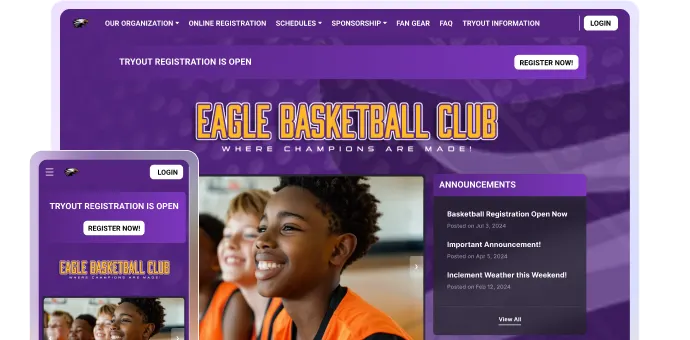
Build a clear, updated website for parents
Your league's website is often the first place families go to learn what you offer and whether it meets their needs. A well-organized site answers common questions upfront and helps families move confidently toward registration.
Make sure your website clearly answers the following:
- Programs: List each program you offer, with links to additional details where needed.
- Seasons: Share season timelines, key dates (such as start and end dates), and important milestones like tryouts or uniform ordering deadlines.
- Cost: Outline fees and any optional add-ons so families know what's included before registering. Early-bird pricing, if available, should be easy to find.
- Player divisions: Explain how players are grouped, such as by date of birth or grade level.
- How to register: Provide clear instructions and direct links to registration forms.
- Who to contact: Include contact information for league leadership, coaches, or volunteer coordinators.
When families can find answers quickly, they're more likely to follow through with registration.
Promote your league on social media consistently
Use social media to share regular updates that help families stay connected to your league. Game-day photos, player spotlights, registration countdowns, and volunteer updates all give people a clearer picture of what participation looks like.
Posts don't need to be polished to be effective. Simple, authentic content that reflects what your league does well often resonates most. Highlight positive moments, recognize good sportsmanship, and show the impact your league has on the broader community.
Partner with schools, community centers, and local businesses
Partnerships with local community hubs — such as independent restaurants, YMCAs, or elementary schools — can help more families discover your league and its programs.
Look for natural connections within nearby neighborhoods. For example, a pickleball, volleyball, or flag football league might post a flyer for a skills clinic at the local park, school gym, or community center where families already gather.
Partnerships can range from formal sponsorships to simple visibility opportunities, like space on a community bulletin board or inclusion in a local newsletter. Working with trusted, established organizations also adds credibility and helps your league reach families who may be new to youth sports.
With Jersey Watch, you can offer sponsorship and donation options during registration
3. Expand your program offerings
Expanding your programs widens the pool of eligible players and helps your league meet the needs of more families. Offering additional options can make participation more accessible and keep interest high across different age groups and schedules.
Add new age divisions or co-ed options
When there's enough demand, leagues can support multiple divisions and program formats. Adding a younger starter division, offering co-ed teams, or introducing an adult league can help you reach more families. Optional development opportunities, such as preseason boot camps, skill clinics, or focused training sessions, also give players additional ways to participate.
These options allow leagues to grow without overcommitting resources or changing their core structure.
Introduce short-format or seasonal programs
Busy or unpredictable schedules can make families hesitant to commit to a full season. Short-format or seasonal programs — like a four-week intro session or a Try-It day for beginners — lower the commitment threshold and make it easier for new players to get involved.
You can also maintain interest during the off-season by offering one-off training camps or small-group sessions. These options keep players connected to the league while helping you stay visible during quieter periods.
Host special events to build excitement
Special events can give families more reasons to stay involved beyond weekly games. Preseason kickoff tournaments, family appreciation nights, or draft day celebrations create natural moments for players, volunteers, or parents to connect outside regular play.
Low-lift events, like picture day, an outdoor movie night, or a family relay, can also help strengthen community ties. When families feel included and connected, they're more likely to return next season and encourage others to join.
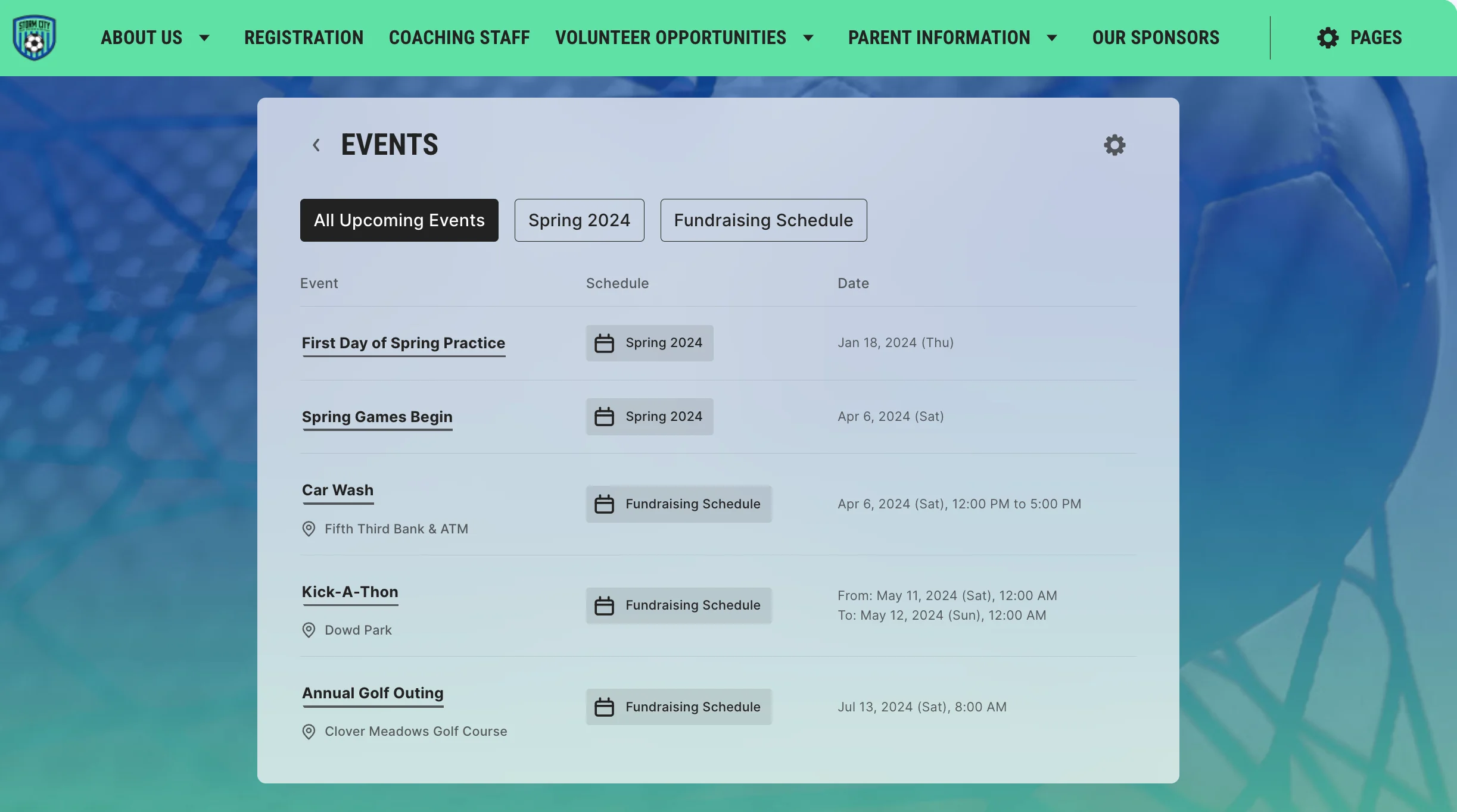
An event calendar created using Jersey Watch scheduling software
4. Improve communication with families and volunteers
Families and volunteers are at the heart of your league. Making communication a top priority helps everyone stay informed, reduces frustration, and supports stronger retention from season to season.
Share clear information across all channels
Unify your messaging across email, your website, and text messages, and use automation where possible to limit errors. For example, send automatic welcome emails immediately after registration and invite families to reach out with questions.
Strong communication depends on timely, easy-to-find information. Post schedules and calendars in a consistent place and make them simple to read. When changes happen, aim to notify families at least 48 hours in advance when possible.
Use centralized tools to avoid scattered updates
Many leagues rely on multiple channels: parents create group texts, coaches use social media, and league staff send emails. When information is spread across platforms, important details are easy to miss.
A centralized messaging tool helps ensure everyone receives the same updates at the same time, without relying on families to piece information together.
Send text messages and emails using Jersey Watch communication tools
Keep coaches and volunteers aligned
Youth sports leagues often count on a rotating group of coaches, volunteers, and referees. As people step in and out throughout the season, gaps in communication can lead to missed details or inconsistent expectations.
Help keep everyone aligned by focusing on a few essentials:
- Role explanations: Clearly outline responsibilities for league staff, coaches, and volunteers to avoid overlap and confusion.
- Regular updates: Share timely updates from league leadership so everyone is working from the same information.
- Clear game-day policies: Set clear expectations for game day, including a code of conduct for staff, referees, players, and spectators.
- Template messages: Use templates or automated messages for common reminders, such as game start times or directions to the field.
5. Deliver a great on-field experience
The on-field experience plays a major role in whether families return each season. Well-run game days help players enjoy the sport, support volunteers and coaches, and create positive experiences that parents are willing to recommend to others.
Create well-organized schedules
Build schedules around consistent practice times, planned make-up days, and clearly marked home and away games. Keep formatting simple — families shouldn't have to decode color-coding or track down facility abbreviations to understand where they need to be.
Planning ahead for common disruptions, such as weather or facility closures, makes last-minute changes easier to manage. Share schedules as early as possible and use a centralized messaging system to keep everyone informed when updates are needed.
Support coaches with resources and guidance
Coaches and assistant coaches play a central role in the game-day experience. Providing clear resources, such as safety reminders, sample practice plans, or season guidelines, helps them focus on players instead of logistics.
Simple resources, like short check-ins or shared playbook templates, can make a big difference over time. When coaches feel prepared and supported, they're more likely to stay involved and deliver a consistent experience from season to season.
Gather feedback and make improvements each season
Surveys can help leagues spot patterns and identify where adjustments are needed. Be sure to include families, staff, volunteers, and players to get a balanced view of the experience.
Ask what participants enjoyed and where they ran into challenges. When you make changes, close the loop by sharing how feedback shaped those decisions. For example, if families said away games felt too far, you might announce closer locations for the following season.
6. Build a strong community and culture
Youth sports leagues are about more than games and practices. They create a shared experience for players, families, and volunteers. A positive, consistent culture helps families feel connected and invested in the league.
Celebrate players and volunteers
Recognizing players, families, and volunteers helps reinforce positive involvement across the league. In addition to formal events, simple gestures can go a long way, such as sharing player highlights on social media or acknowledging standout volunteers in newsletters.
Even small moments of recognition, like thanking parents for good sportsmanship or hands-on participation, help reinforce the values you want reflected throughout the league.
Foster a culture of fun, safety, and inclusivity
Families value a league environment that feels welcoming, fair, and well-run. Clear safety procedures, inclusive communication, and consistent expectations all contribute to a culture that supports players and families both on and off the field.
Applying rules consistently builds trust and signals that your league prioritizes respect, safety, and positive behavior — not just outcomes on the scoreboard.
Encourage families to invite friends
Referral programs or buddy systems can help introduce new families to your league. For example, offering a small fee credit when a participant brings a friend to a preseason pickup game can lower the barrier for first-time players.
Inviting a friend often makes new participants feel more comfortable getting started and helps your league expand through personal connections.
Growing your sports league with Jersey Watch
Growing a sports league depends on strong relationships with families, volunteers, and the broader community. Instead of relying on big, one-time changes, focus on small, consistent improvements that address common friction points and make participation easier for everyone involved.
All-in-one digital tools like Jersey Watch help simplify that work by bringing registration, communication, scheduling, and payments in one place. Even a few focused updates, like centralizing communication, collecting volunteer feedback, or adding one new event, can strengthen engagement and improve retention without adding administrative strain.
Ready to increase signups and participation? Sign up for Jersey Watch's all-in-one digital management tool today.
FAQs
How do you grow a youth sports league?
Focus on making it easy for families to participate. Simple online registration, consistent communication, and clear schedules help remove friction. Outreach through digital channels or local community partnerships can also help bring in new players, volunteers, and coaches.
How early should leagues start promoting registration?
Most leagues see the best results when they begin promoting registration six to eight weeks before the season starts. This gives families time to plan and helps avoid last-minute sign-ups or confusion.
What if our league has limited volunteers?
Start by automating time-consuming tasks. Digital tools can handle registration, payments, and reminders, freeing volunteers to focus on planning, communication, and supporting teams.
What programs help boost participation?
Programs like short-format clinics, co-ed divisions, young starter groups, and preseason tournaments can attract a wider range of families. Off-season offerings can also help maintain engagement outside the main season.
How do leagues keep families coming back each season?
Clear expectations, consistent organization, and positive experiences all play an important role. When families feel informed, respected, and supported, they're more likely to return and recommend the league to others.

Sierra SwigertOperations Manager
Sierra Swigert is the Operations Manager at Jersey Watch. She works directly with youth sports organizations every day and writes educational resources based on her firsthand experience supporting league administrators and volunteers, as well as her background competing in cross country and track.


