
Table of Contents
The importance of communication can't be overlooked in youth sports. Coaches and parents must work together to create a positive experience for everyone involved. Effective sports team communication means sharing the right updates with the right people at the right time through clear, consistent channels.
That means keeping clear communication between coaches and parents at all times. This is especially important when it comes to volunteer requirements, game and practice schedules, event cancellations, and playing time expectations.
Youth sports parents and coaches don't always see eye to eye. Coaches are often making decisions on the fly, while parents want their kid to get more playing time or to play a specific position.
When a parent speaks with a coach, it helps to be direct, explain the concern clearly, and focus on solving the problem instead of assigning blame. Remember the coach is a volunteer and trying to do their best.
When a coach speaks with a parent, it helps to be specific, respectful, and mindful of tone so the conversation stays productive.
The right sports team management tools make it easier to stay organized and improve the experience for everyone involved.

1. What should coaches communicate to parents early and often?
Coaches should share expectations, schedules, requirements, and changes before parents have to ask. A strong parent-coach relationship makes the whole program better for players, parents, and coaches.
Parents expect to be constantly updated with details about their children’s field performance as well as their overall development. When coaches and administrators make a real effort to involve parents, those parents are more likely to offer the emotional support that helps a child stay committed and perform well.
How should coaches explain program philosophy?
Families should hear the program's values, goals, and expectations before the season starts. Every sports program has a core set of values and vision for creating an experience that helps young athletes to grow and prosper.
New athletes as well as their families need time to get acquainted with the program's traditions, history, and culture. That’s why it’s important for them to be introduced in a way that sets out and clarifies these values from the start.
Parents want reassurance that their child's time in the program will help shape them into a confident young adult. Parents also need clarity, and they appreciate open communication that helps them understand your coaching perspective.
They’ll also have peace of mind knowing that their children are getting involved with someone who truly cares about both sport and character development. This way, coaches and parents build rapport and trust.
What program basics should parents hear about?
Parents need clear updates on practice locations, game schedules, equipment needs, off-season programs, and rule reminders. When the action begins, important information needs to be shared with parents.
These details can include where practices and games will be held, what equipment players need for training or off-season programs, and the rules that keep everyone eligible to play. These details can change, so it’s crucial to keep parents informed via an easy-to-navigate website, a newsletter or a "you made the team" letter.
How should teams address parent concerns?
Parent concerns should be handled early, respectfully, and through a clear one-on-one process. Parents should feel comfortable approaching coaches about any concern, big or small.
One-on-one meetings are a great way to meet parents' expectations and give them a constructive way to get involved in the program. Whether parents want to discuss a child's well-being or a behavior concern, working together helps kids reach their full potential on and off the field.
2. What tools make sports team communication easier?
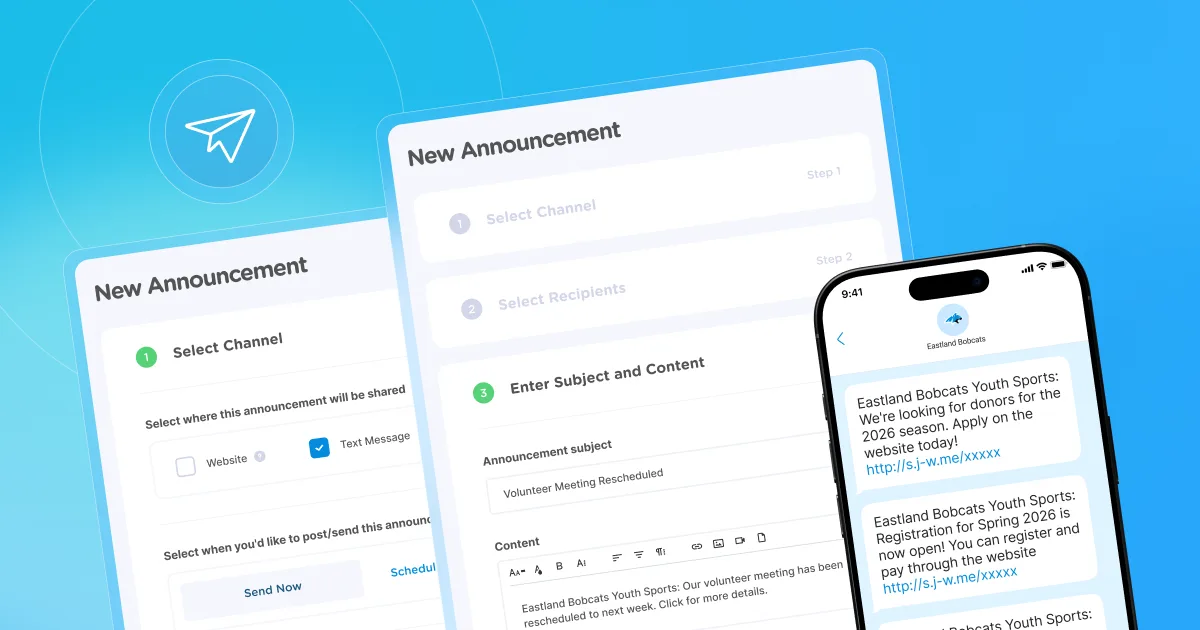
Text, email, websites, and sports communication platforms help coaches reach the right families quickly. Coach-parent communication can get complicated, and online tools help keep it simple.
Coaches and administrators want tools that are quick to use so they can stay focused on their teams. Modern platforms should have the features needed to sort the contact information by sports, seasons, age groups, and team size. Jersey Watch’s built-for-sports communication hub ticks all the boxes and enables you to send and schedule messages with just a few clicks.
Coaches can send targeted messages to specific lists quickly. Some parents may have children who participate in different teams under the same organization so that separation is important. A well-organized hub makes it easy to set up your communication platform.
A simple channel guide can help volunteers know where each update belongs:
- Use text or app messages for urgent updates, like a last-minute cancellation or field change.
- Use email for longer reminders, volunteer notes, and weekly updates.
- Use your website for schedules, registration details, program rules, and information families need to find again later.
Here are a few sample messages you can copy and adjust for your team:
- Game cancellation: “Tonight’s 6:00 p.m. game is canceled due to weather. We’ll share the makeup date as soon as it is confirmed.”
- Practice reminder: “Reminder: Practice is tomorrow at 5:30 p.m. on Field 2. Please bring water, cleats, and a glove.”
- Parent update: “Thanks for a great first week. This weekend’s schedule is posted on the team website, and we still need two volunteers for concessions.”
Sending or scheduling a text message or email is an easy process with Jersey Watch
3. How can coaches set communication boundaries with parents?
Boundaries help coaches stay available and respectful without turning every decision into a sideline debate. Keeping parents updated on their child's performance matters, but coaches also need to maintain certain boundaries.
It's normal for a parent to push against the boundaries in various ways. For example, some may feel that their child deserves more playing time or attention.
An effective communication platform and a clear code of conduct help set the ground rules.
4. How can your website reach your whole youth sports community?
Your website should be the central place for schedules, announcements, cancellations, and registration details. Any information that is important to a coach, player or parent should be placed on your team site.
Regardless of whether an athlete is a beginner or has more field experience, there’s a lot of information they’ll need to digest when working with a coach. Some information a coach may want to share with the team includes schedules, program philosophy, and competition updates.
Coaches handling multiple sports or age groups may need to share program basics with everyone at once. A central place to share that information makes it easy to reach every player.
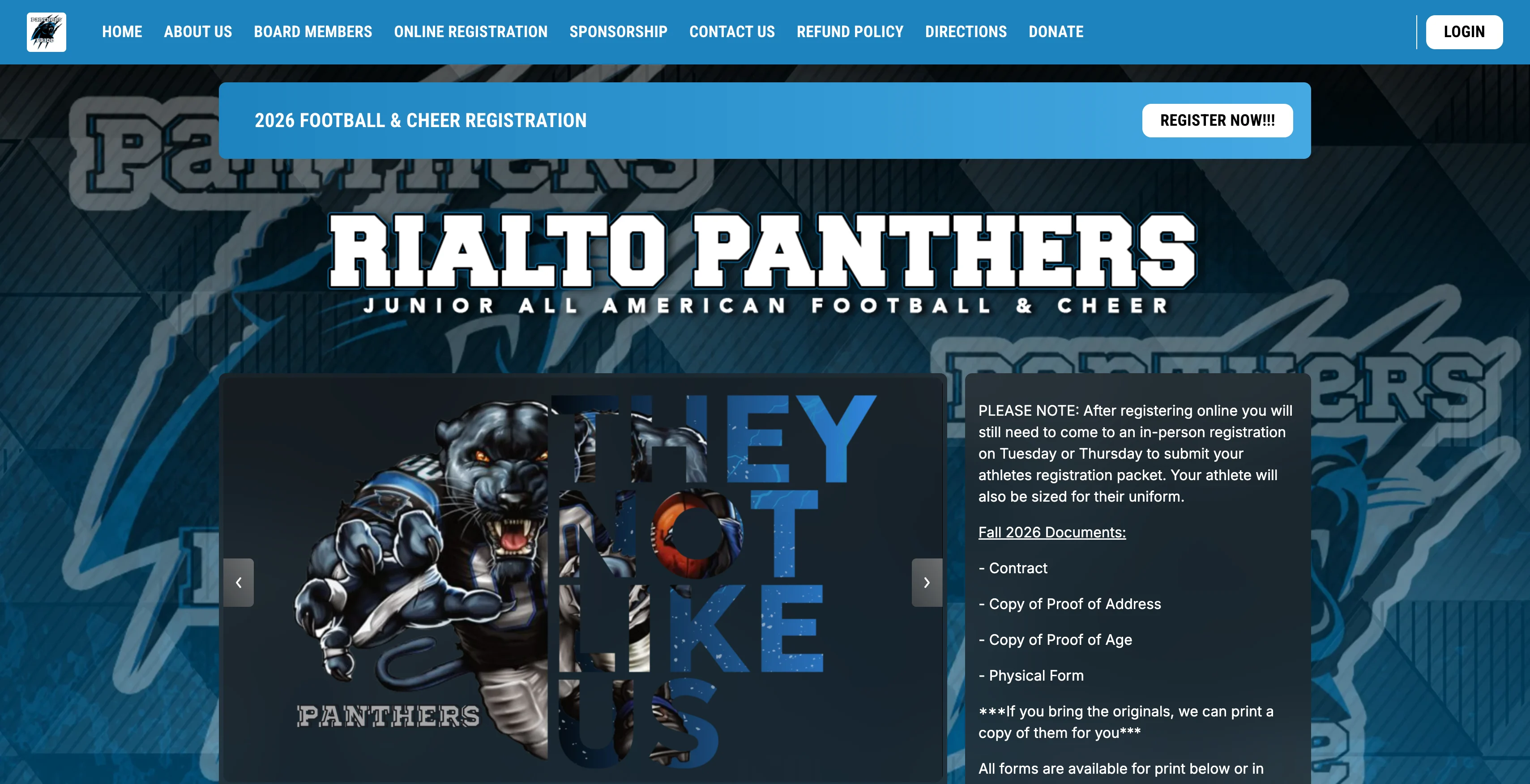
A youth football and cheerleading website created using Jersey Watch
5. How do you create a simple sports team communication system?
A simple system keeps administrators, coaches, parents, staff, and sponsors working from the same information. Managing the coach-parent-player relationship requires volunteers to use modern tools that save time while creating stronger ties across the team.
When there is recurring and clear communication, all the members of the organization can collaborate easily. The focus of sports volunteers should be on the player, so streamlining communication makes that possible.
How can Jersey Watch simplify sports management next season?
Jersey Watch can help youth sports organizations manage communication, collaboration, and administrative tasks in one place. Sports management software that brings registration, the website, messaging, and scheduling into one place makes it easier to manage a sports organization effectively.
Jersey Watch gives coaches the tools to handle admin tasks faster and with less hassle. Try out all of the features for free and when you're ready to make next season easier, pay $19 to get started.
FAQs
What are the 5 C's of communication in youth sports?
A helpful way to think about the 5 C's is clear, concise, consistent, courteous, and complete. For a youth sports team, that means families should understand what is happening, when it is happening, and what they need to do next. It also means coaches and parents should keep messages respectful, even when the topic is playing time, behavior, or a schedule change.
What are the 7 C's of communication?
The 7 C's are often listed as clear, concise, concrete, correct, coherent, complete, and courteous. In a sports setting, they are a simple checklist for writing better team updates. Before sending a message, make sure the details are accurate, the action step is easy to understand, and the tone fits the way you want your team community to feel.
How can coaches communicate better with parents?
Coaches can communicate better with parents by setting expectations early, using the same channels all season, and responding to concerns with respect. It helps to explain how playing time, positions, practices, cancellations, and parent questions will be handled before the first game. When everyone knows the process, small questions are easier to answer and big conversations stay calmer.

Courtney CalvoCustomer Care Team Lead
Courtney Calvo is the Customer Care Team Lead at Jersey Watch, where she helps youth sports organizations get started with registration, websites, and league management tools. She brings both professional expertise supporting leagues and firsthand experience as the parent of a youth soccer player.


