How to Create a Code of Conduct for Youth Sports (+ Template)

Sierra Swigert Last updated: January 15, 2026

Poor sideline behavior, such as taunting or inappropriate physical contact, has become more common in youth sports. When expectations around behavior aren’t clearly defined, volunteers, coaches, and officials are left to manage these situations in the moment, which increases stress and safety risks.
A code of conduct helps protect players and volunteers by setting firm boundaries before issues escalate. It also gives leagues a consistent way to address behavior, support inclusion, and reduce conflict on and off the field.
While you can’t control every reaction, you can define what’s acceptable and enforce it fairly. This guide explains how to create, share, and uphold a code of conduct (CoC) for parents, athletes, and coaches, with a simple template to get started.

What is a code of conduct?
A code of conduct outlines the expected behavior within your organization and sets standards for sportsmanship across your community. Some leagues use a single set of guidelines for everyone, while others create role-specific versions, such as a parent’s code of conduct, to address the different roles adults, athletes, and coaches play.
At its core, a code of conduct should promote fair play, support a safe environment, and remind adults of their responsibility to be a positive role model. It reinforces good behavior, discourages unsportsmanlike conduct, and helps your league focus on building a stronger, more respectful team culture.
In 2026, this type of policy helps address:
- Expectations: Clear expectations reduce confusion and keep the focus on the positive aspects of team sports.
- Referee shortages: With fewer officials available, shared behavior guidelines help maintain fairness during games and practices.
- Inclusion: Thoughtful policies help create an environment that welcomes participation rather than excludes it.
Code of conduct template and example
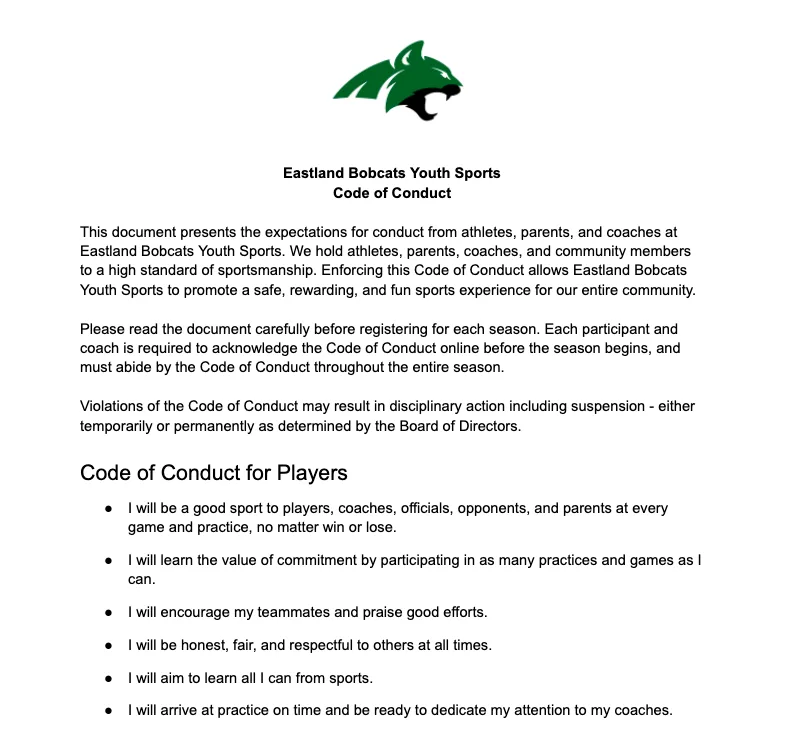
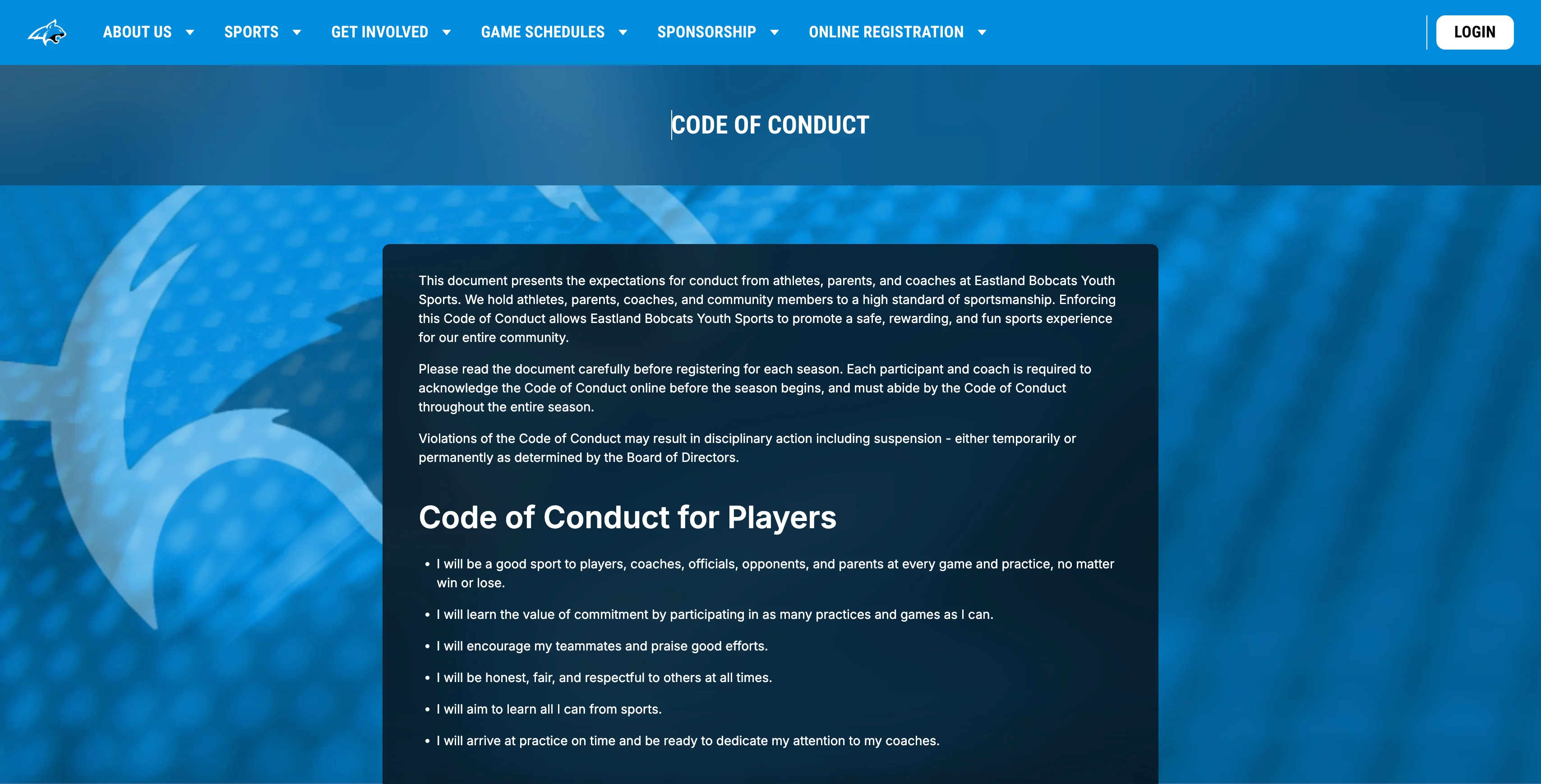
Use this code of conduct template as a starting point and customize it to fit your organization’s needs.
How to build your code of conduct
A strong code of conduct is built in a few simple steps:
- Start with a short introduction explaining the purpose of the CoC and why it matters to your organization.
- List behavior standards in clear bullet points so they’re easier to scan and understand.
- Require parents, coaches, and athletes to acknowledge the CoC, either through a digital sign-off or a physical signature.
Next, we’ll look at how to apply these principles to different audiences within your league.
Parent code of conduct
Positive parental behavior plays a major role in shaping the youth sports experience. The way parents show up — on the sidelines and beyond — sets the tone for players, teams, and the broader league community. When standards are shared, it’s easier to reinforce sportsmanship and reduce conflict across the season.
A parent’s CoC might include:
- I will prioritize the emotional and physical well-being of youth participants over my personal desire to win.
- I will respect players, coaches, officials, spectators, and families at all times.
- I will not use profanity at any time.
- I will not engage in violence or make verbal threats.
- I will not scold my child during a game.
- I will model inclusivity through my words and actions.
- I will not yell instructions or advice from the sidelines.
- I will model good sportsmanship for all youth participants.
- I will respect the official’s decisions and refrain from arguing, yelling, or questioning calls during games.
- I will not belittle or ridicule anyone involved in a youth sporting event, whether in person or online.
- I will help keep sports fun, positive, and supportive.
- I will refrain from posting negative comments on social media or other digital platforms.
Because parental behavior often influences how young players act and respond, starting with a clear parent code of conduct creates a solid foundation for addressing on-field behavior and reinforcing shared standards across the league.
Athlete code of conduct
Whether your league is highly competitive or focused on fun and development, youth athletes need to understand what’s expected of them. Clear, age-appropriate language helps reinforce responsibility, teamwork, and respect without overcomplicating the message.
A player code of conduct might include:
- I will be a team player and good sport to teammates, coaches, officials, the opposing team, and parents — win or lose.
- I will attend practices and games consistently and be ready to participate.
- I will practice inclusivity with teammates and opponents alike.
- I will encourage my teammates and recognize good effort.
- I will be honest, fair, and respectful at all times.
- I will arrive on time, listen to my coach, and give my best effort.
Use your league’s experience to tailor these guidelines, especially if you’ve seen the same challenges repeat season after season.
You can also ask coaches to share their biggest pain points and what they’d like addressed in a code of conduct. Their perspective matters — coaches play an equally important role in shaping sportsmanship and setting daily expectations for athletes.
Coach code of conduct
Head coaches, assistant coaches, and substitutes should be held to the same code of conduct. As national coaching standards increasingly emphasize professionalism, safety, and self-awareness, a clear CoC helps coaches navigate the challenges of a long season with consistency and confidence.
A coach’s CoC might include:
- I will create a positive, supportive atmosphere for athletes.
- I will help foster a respectful experience for players, parents, and opponents.
- I will follow all league safety protocols and guidelines.
- I will not argue with referees or officials.
- I will communicate with officials in a calm and respectful tone.
- I will practice developmentally appropriate coaching based on each player’s age and abilities.
- I will prioritize player safety over winning.
- I will promote confidence and skill development rather than shortcuts or intimidation.
- I will treat opposing coaches and athletes with respect.
- I will report any code of conduct violations involving parents, athletes, or other coaches to league officials.
These guidelines give coaches a solid starting point for setting boundaries and handling difficult situations, grounded in real-world experience rather than guesswork.
⚡ Action: Encourage or require all coaches to sign the code of conduct before the season begins.
How can a code of conduct improve the youth sports experience?
A well-defined CoC improves the youth sports experience by:
- Reducing inconsistency: Setting standards before the season begins helps establish a shared behavioral baseline, whether situations arise on or off the playing field.
- Promoting goodwill: Players, parents, and coaches may have different motivations, but a code of conduct reinforces shared values and helps de-escalate tense moments.
- Clarifying consequences: When expectations are documented, it’s easier to apply fair and consistent consequences, such as restricting sideline access for a parent or implementing a performance improvement plan for a coach.
Tips for upholding the rules
Upholding a code of conduct comes down to even-handed enforcement, fairness, and accountability. When everyone understands the standards, it’s easier to address issues early and keep situations from escalating. The key is applying the same rules to everyone, regardless of role, tenure, or visibility.
Require parents and athletes to acknowledge the Code during registration
Before the first practice, make sure parents and athletes formally agree to the code of conduct:
- Build a required sign-off or acknowledgement into your online registration form.
- Distribute and collect signed physical copies if needed.
- Confirm that coaches do not allow athletes to attend meetings or practice until the code of conduct is acknowledged.
Simple, proactive steps — like making the Code easy to access during registration or pairing it with safeguards like a youth sports background check — help reinforce shared standards and support a smoother, more successful season.
Be consistent with enforcement
Alongside behavior standards, your youth sports code of conduct should clearly explain how violations are handled. Apply the same remediation process to everyone, whether they’re a new league participant, a top fund raiser, or a star athlete.
In most cases, positive reinforcement is enough. When it isn’t, your code of conduct should outline when disciplinary action is required and what that looks like in practice.
For example:
- Verbal warning for a first minor offense, followed by a written warning if the behavior continues.
- Temporary suspension for repeated violations.
- Permanent suspension for serious or unsafe behavior.
Post the code of conduct on your website and include it in printed materials so families know where to find it. Inviting questions and addressing concerns openly helps reinforce fairness and ensures every family feels informed and respected.
Want to learn more about youth sports contracts? Check out our guide for program admins.
How to communicate your code of conduct
Communication methods vary by league, but using multiple channels helps ensure everyone stays informed:
- League website: Create a dedicated section for your code of conduct or add it to an existing page, such as league rules.
- Team materials: Share printed copies during team meetings or include them in welcome packets so families can reference them easily.
- Season kickoff review: Walk through the Code with parents and young athletes at the start of the season, using real-life examples to show how respect and sportsmanship apply in practice.
- Post reminders: Use signs or posted reminders at fields and gyms to reinforce positive behavior and promote awareness throughout the season.
With a digital tool like Jersey Watch, leagues can build waivers, share Codes of Conduct, collect acknowledgments during registration, and track sign-offs — all in one place.
Safeguard your sports organization with a code of conduct
These guidelines work much like an insurance policy: you hope you never need it, but it’s there when issues arise. By setting standards upfront, it can help prevent problems from escalating while promoting safety, inclusivity, and a more positive league culture.
As you draft or update your Code, gather input from board members, parents, coaches, and officials. Involving key stakeholders helps ensure language is clear, practical, and easier to uphold, whether the Code is shared online or reviewed together at a meeting.
Simplify communication, registration, and code of conduct sign-offs with Jersey Watch to keep everything organized in one place. Get started today!
Trends in youth sports conduct for 2026
In 2026, youth sports organizations are placing greater emphasis on:
- Accountability: A code of conduct is treated as a formal agreement between parents, players, and coaches. When violations occur, leagues are expected to respond promptly and consistently.
- Mental health: There’s increased awareness of how toxic competition affects young athletes. More Codes of Conduct now prioritize positive experiences, emotional well-being, and development over winning at all costs.
- Anti-bullying: Bullying can happen in person or online, and leagues are paying closer attention to interactions among parents, coaches, and players to address issues early and prevent escalation.
Create a code of conduct for your youth sports league with Jersey Watch
A structured, consistent code of conduct helps youth sports programs set shared standards, reduce conflict, and support a safer, more supportive environment. By clearly defining expectations for parents, athletes, and coaches, leagues can address issues early and protect the people who keep the season running, especially volunteers.
Digital tools like Jersey Watch make it easier to create, share, and manage your code of conduct alongside registration and ongoing league communication. With built-in templates and simple sign-off features, leagues can keep policies visible, organized, and easy for families to acknowledge.
Ready to put a stronger code of conduct in place? Sign up with Jersey Watch to simplify registration, communication, and accountability.

Sierra SwigertOperations Manager
Sierra Swigert is the Operations Manager at Jersey Watch. She works directly with youth sports organizations every day and writes educational resources based on her firsthand experience supporting league administrators and volunteers, as well as her background competing in cross country and track.


