7 Ways To Increase Youth Sports Participation in Your Community

Sierra Swigert Last updated: January 18, 2026

Table of Contents
Running a recreational sports league has gotten harder. More organizers are seeing fewer sign-ups, lower retention, and more families opting out altogether as schedules tighten and expectations increase.
Recent data shows just how real the challenge is: youth sports participation declined by 13% between 2019 and 2023, with more kids focusing on a single sport instead of playing multiple throughout the year.
Today, the biggest barriers for families often come down to affordability, safety, and time. The good news is that local leagues still have meaningful ways to reverse the trend. The strategies below focus on practical, community-first steps you can take to increase participation, keep families engaged, and build a stronger program for the long term.

1. Keep costs down
Registration fees, uniforms, and equipment add up quickly, creating real barriers to getting involved in youth sports. Today, the average household spends around $1,000 per year on a single child’s primary sport, before factoring in additional expenses like gear replacements and travel.
In recent years, this financial pressure has changed how youth sports are perceived, making participation feel less accessible to families across different socioeconomic backgrounds. What was once viewed as a community activity can now feel out of reach for many households.
To help welcome families from all income levels, consider these community-supported options:
- Fundraising: From small donation drives to larger events, nonprofit fundraising can rally the community around keeping youth sports programs affordable and inclusive.
- Grants: Public and private grants can provide meaningful financial support. While availability varies year to year, many programs qualify if they meet community or accessibility criteria.
- Sponsorships: Local sponsorships create mutual value. Businesses support your programs, and leagues strengthen ties with the community that supports them.
If managing fundraising feels overwhelming, an all-in-one digital tool can help streamline the process by tracking donations, organizing channels, and simplifying budgeting. Centralizing these efforts makes it easier to monitor progress and plan what comes next.
2. Recruit quality coaches
Quality coaches play a major role in participation and retention, helping kids build skills and develop a genuine love of the game. If your program relies on volunteers, prioritize one lead coach with solid experience to anchor the season. For instance, a former college softball player can bring structure and confidence to a Little League team.
A strong lead coach balances practical instruction with emotional support. They help kids build skills while still leaving room for fun. Assistant coaches may have less experience, but they should understand the basics and feel comfortable stepping in when needed.
If you’re struggling to recruit the right people, broaden your search. Look to high schools, community programs, and online volunteer networks. Sharing your needs more widely often surfaces unexpected and highly capable candidates.
To better support your coaches, consider:
- Training: Short boot camps or workshops can build confidence and consistency.
- Mentorship: Former athletes, personal trainers, and educators can offer guidance on leadership and motivation.
- Certification: CPR training or coaching credentials add credibility and reinforce safety standards.
Your coach sets the tone of your league. When you have a strong role model at the top, it’s easier to build trust, retain players, and create a positive experience families want to return to.
3. Emphasize safety
Sports injuries remain a significant concern for youth programs. In 2024 alone, 4.4 million people visited the ER for sports-related injuries, highlighting the need for consistent, proactive safety measures for young athletes.
While risk varies by sport and level of contact, every sports organization should take steps to reduce preventable injuries and protect player well-being. Core safety practices include:
- Equipment checks: Inspect pads, helmets, and other gear regularly to reduce injury risk during practices and games.
- Concussion protocols: Make sure coaches, volunteers, and substitutes can recognize concussion symptoms and know when to seek medical evaluation — see sports-related head injury guidance from AANS for more information.
- Weather awareness: Heat, cold, and severe conditions increase injury risk. Adjust schedules as needed and build in precautions like extra water breaks.
You can also adopt established safety programs like the CDC’s HEADS UP initiative, which offers training and guidance to help prevent brain injuries across youth sports like football, basketball, and soccer. Beyond improving safety, these programs can reinforce your organization’s credibility with families and volunteers.
4. Grow your presence online
A professional online presence helps parents verify information and feel confident in your program. From your website to social media, strong digital channels can increase sign-ups and keep families engaged during the season and year-round.
Instead of relying on scattered text threads, parents can turn to your official channels for accurate, up-to-date information. Whether your community prefers Instagram, YouTube, Nextdoor, or Facebook, focus your efforts where families already spend time.
To keep your pages active and relevant, share content like:
- Highlights: Memorable moments like last-minute baskets, big plays, or standout effort.
- Testimonials: Short quotes from players, parents, or volunteers that reflect the program’s impact.
- Behind-the-scenes: Practice footage, team interactions, or coach messages that show your program’s culture.
A professional website is equally important. During the season, families should be able to find schedules, results, league standings, and location details in one place. In the off-season, the same site can house contact information, board members, and upcoming registration dates — keeping your program visible and accessible all year.
The right digital tool makes it easier to build, update, and maintain your site without extra overhead, so your information stays current long after the final game ends.
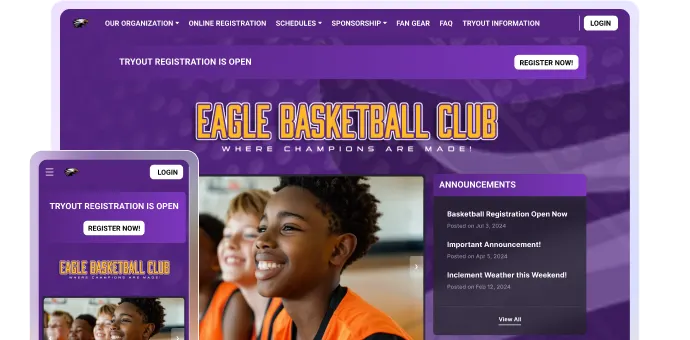
Create a website for your sports organization in less than 15 minutes with Jersey Watch. Create an account to get started today.
5. Use proven outreach strategies
To increase participation, you first need to increase awareness. With families juggling busy schedules, clear and consistent outreach helps keep organized sports visible and top of mind.
Focus on a mix of digital and community-based tactics:
- Email and text: Use your existing contact list to share key updates, like registration openings and deadlines.
- Flyers: Post registration flyers in high-traffic community spaces, like grocery stores, coffee shops, and recreation centers.
- Signs: Yard signs or posters can build broad awareness, especially during peak registration periods.
- School partnerships: Partner with local schools to reach families directly, such as having a coach lead a physical education class or after-school program.
- Small businesses: Invite local businesses to participate, like wearing league T-shirts or displaying registration information.
- Automation: Automated email or text reminders reduce manual work and help ensure families don’t miss important dates.
- Fundraisers: Year-round fundraisers support your budget while keeping your program visible in the community.
Whether you’re sharing a reminder during the off-season or reconnecting with past participants, consistent outreach helps families stay engaged with organized sports and ready to rejoin when the season starts.
6. Recognize and reward participation
Participation takes dedication, whether it’s pushing through a tough practice or making space for a teammate to succeed. Leaders who recognize these efforts reinforce sportsmanship and strengthen the values that keep kids engaged.
Thoughtful recognition also supports youth development by showing players that effort, improvement, and teamwork matter, not just wins. Consider simple, inclusive ways to celebrate participation:
- Awards: Rewarding your players with trophies, certificates, or small gift cards can motivate them throughout long seasons.
- Social media spotlights: Highlight hard work, leadership, and positive attitudes, giving everyone a chance to be recognized.
- Family events: Casual scrimmages, cookouts, or team gatherings bring families together and show appreciation for the entire community.
Consistent recognition builds camaraderie, encourages positive behavior, and boosts word of mouth. When players feel valued, volunteers feel appreciated, and coaches build stronger relationships, retention naturally improves.
7. Measure success and adapt
Success looks different for every program, which makes clear, measurable goals essential. Setting benchmarks helps you track progress over time and understand what’s working and what needs adjustment. Look at trends like registration numbers, retention rates, and parent feedback from past seasons to establish a baseline.
After reviewing your data, you might set goals such as:
- Increase sign-ups by 10%.
- Retain at least 75% of last season’s players.
- Secure a partnership with the local elementary school or middle school.
- Recruit one new assistant coach with relevant experience.
- Launch a new incentive program for players.
Clear goals give you room to adapt throughout the season. If sign-ups lag, you might increase local outreach or adjust your messaging. If retention dips, feedback can point to scheduling, coaching, or communication gaps.
As you review results, use available resources to course-correct. That might mean asking parents for coach referrals, refining outreach efforts, or using digital tools to track registrations and automate reminders.
Building a stronger youth sports community
Youth sports participation is closely tied to how accessible, organized, and welcoming your program feels. Keeping costs manageable, recruiting supportive coaches, prioritizing safety, and staying visible in your community all play a role in attracting families and keeping kids involved season after season.
You don’t need to overhaul everything at once. Small, intentional improvements like simplifying registration, improving communication, or streamlining schedules can make a meaningful difference for families and volunteers alike.
Jersey Watch helps leagues manage these essentials with tools for registration, scheduling, communication, and payments — all in one place.
⚡ Ready to grow your participation rates and build a more sustainable program? Sign up with Jersey Watch today!
FAQs
How does participating in team sports impact social development?
Team sports help kids build interpersonal skills and learn cooperation, both of which support healthy social development, while also encouraging positive routines. Participation helps establish stronger peer relationships and can reduce high school dropout rates, while regular physical activity supports mental health and helps reduce childhood obesity.
What are the 4 C's of athlete development?
The 4 C’s are competence, confidence, character, and connection. A positive sports experience gives young athletes repeated opportunities to nurture skills, gain confidence through effort, and learn how individual growth contributes to team success. These lessons extend beyond sports and support long-term personal development.
What strategies can help increase youth sports participation in my community?
Programs can increase participation by lowering costs, recruiting supportive coaches, and improving outreach both online and off. Successful leagues focus on creating welcoming, well-organized environments that prioritize growth, safety, and inclusion over competition alone.
Youth sports also give communities a structured, positive outlet for kids to challenge themselves and stay engaged. When families, schools, and local organizations invest together, participation becomes easier to sustain over time.

Sierra SwigertOperations Manager
Sierra Swigert is the Operations Manager at Jersey Watch. She works directly with youth sports organizations every day and writes educational resources based on her firsthand experience supporting league administrators and volunteers, as well as her background competing in cross country and track.


