
Table of Contents
Most "best sports website" roundups point to professional franchises: full-time design teams, broadcast budgets, ticketing systems built for 50,000 fans. That's not the model for a five-person volunteer board running Saturday morning games for youth athletes. What actually helps is seeing what other volunteer-run leagues built, and what one thing each one got right.
The sports website designs worth copying share the same handful of features: clear navigation, current information, online registration, payment collection, and enough trust signals that a parent feels comfortable handing over a fee. Each example below is matched to one of those features so you can find the piece your own site is missing and take it from there.
What makes a youth sports website work
A youth sports website works when families can find current information and finish registration and payments without bouncing between separate tools. Colors, logos, and homepage banners come second.
Let’s run a quick test to see if your current site meets the basic guidelines. Open the site on your phone, the same way most parents will. Try to find the schedule, the registration link, and a way to contact someone. If any of those takes more than one or two clicks, that's a problem to fix.
A few more things to check:
- Speed: Does the page load fast, or does it stall while a parent is standing in a parking lot trying to check a game time? Slow pages lose people before they see anything.
- Accessibility: Can someone with larger text settings or a screen reader still read your schedule and register their kid?
- Currency: Is the information on the page current, or is it last season's schedule with a new date pasted at the top?
A site that looks sharp but buries registration three menus deep, or loads slowly on an older phone, isn't doing its job. Prioritize what parents and volunteers need day to day, follow best practices, and then let the visual extras follow.
Why these 5 examples made the cut
Registration, domain, payments, credibility, and communication: these are the five issues that come up most often when a volunteer-run site falls short. Here's a quick look at what sport each example serves and the one thing it does best.
Sport | Organization Type | Standout Feature | |
Bentworth Boys Basketball | Basketball | Recreational and travel basketball league | Online registration |
Moore Wrestling | Wrestling | All ages wrestling club | Custom domain |
Northfield Cardinals | Multi-sport | Multi-sport youth association (recreational and travel) | Online payments |
Fentress County Soccer Club | Soccer | County soccer club | Credibility signals |
Lawton Rocket Football | Football | Youth football league | Team communication |
1. Bentworth Boys Basketball for online registration
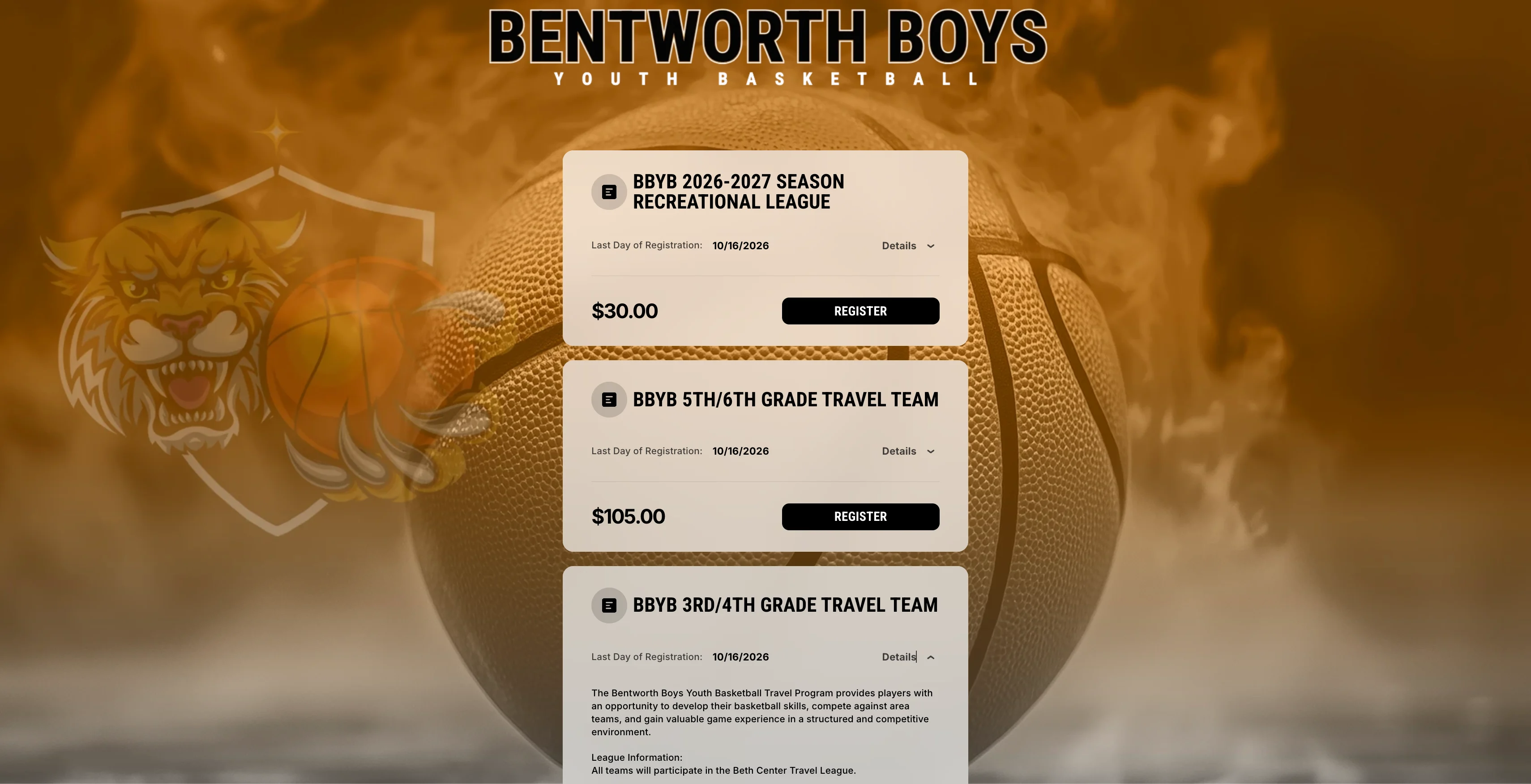
What they did: Split registration into two separate paths, one for rec families and one for travel teams, with clear labels for each.
That small design choice does a lot of work. A parent who wants a low-key rec season doesn't have to wade through travel team details, and a travel family doesn't have to guess whether they're on the right form. Their organization splits travel teams by age so parents can quickly self-select the correct grade level for their child.
The registration page also includes important information about price, when the last day to complete registration is and has an additional link to read more details about each program.
What to copy: Set up separate forms or clearly marked paths for each program type you offer, whether that's rec versus travel or beginner versus competitive. One generic form with a buried dropdown leads to mix-ups and extra emails.
2. Moore Wrestling for custom domain
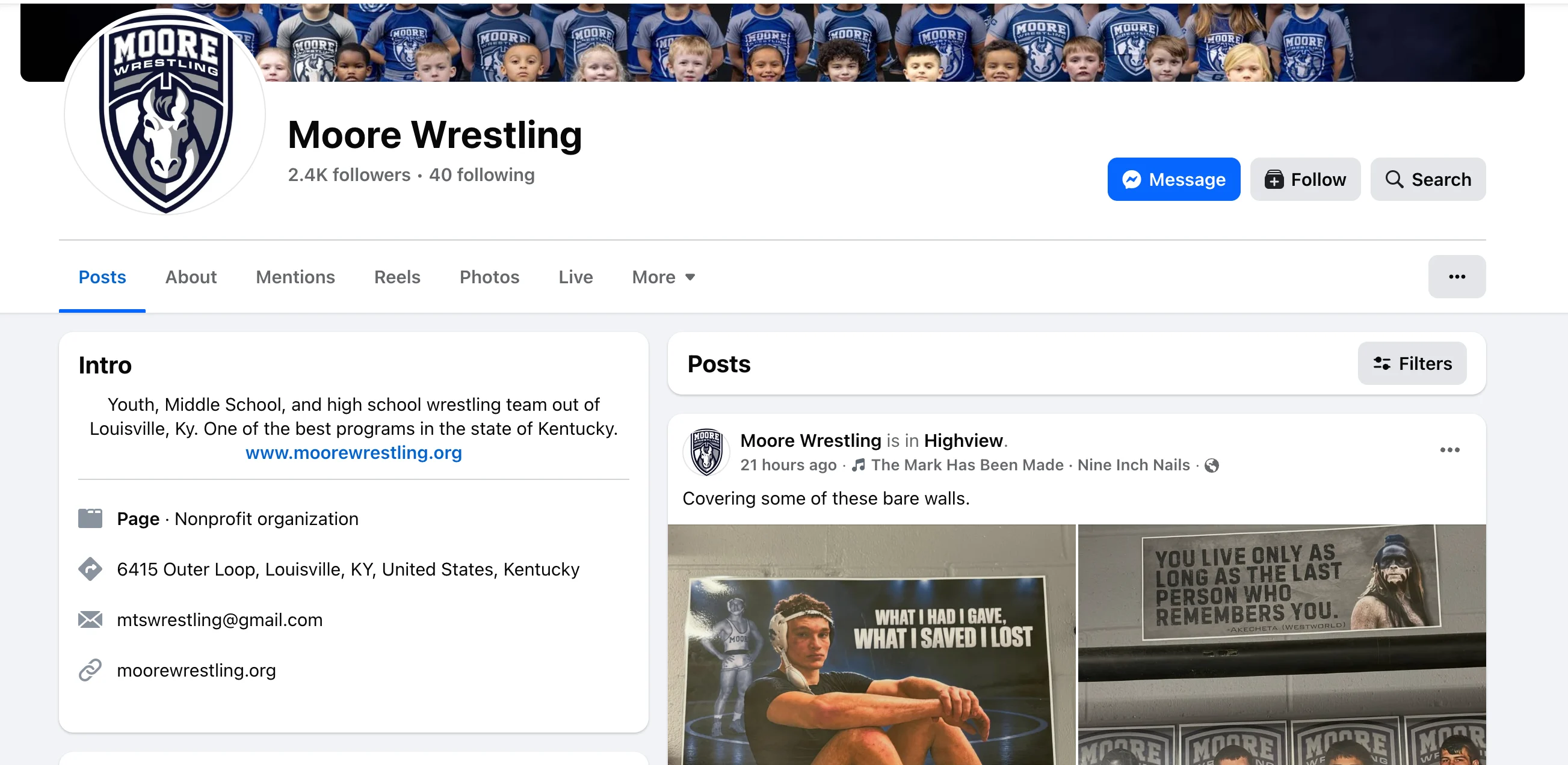
What they did: Used a clean, club-owned domain (moorewrestling.org) and listed it in their Facebook About section so anyone who finds them on social media has a direct path to the website.
A custom domain signals that the club is established. A clean address with no platform name tacked on or long string of dashes is easy to remember and quick to trust. This matters most when a parent is comparing options for the first time and deciding who to trust with a registration fee.
What to copy: Add your website address to every social profile's bio or About section, not just the ones you check most often. And if you're on a platform that assigns a generic subdomain, switch to a custom domain. Every Jersey Watch subscription includes one at no extra cost.
For more on turning that first impression into a full roster, see this guide on how to recruit more youth wrestlers to your club.
3. Northfield Cardinals for online payments
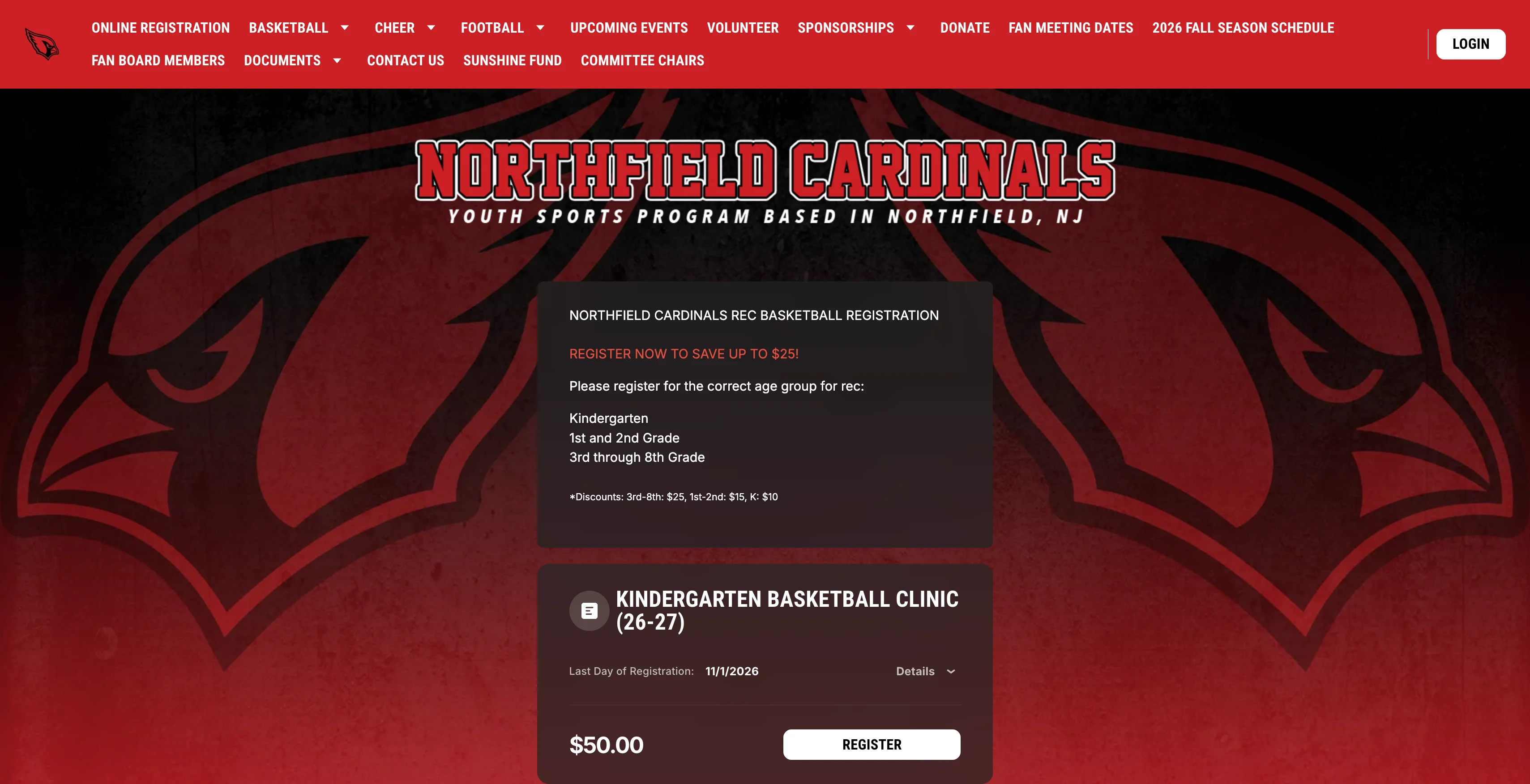
What they did: Built two payment features into registration: an early-bird discount and a Sunshine Fund for families who need financial assistance.
Northfield Cardinals runs under the Family Association of Northfield (F.A.N.), covering both recreational and travel-level programs. The payment approach has to flex for different families with different needs, and both features make that visible. The early-bird discount gives parents a reason to register before the deadline. The Sunshine Fund puts assistance right on the page, with a name families recognize, so nobody has to dig through a contact form or send an awkward email asking if help is available.
What to copy: Look for a registration setup that builds in pricing flexibility rather than a flat fee for every family. An early-bird incentive and a named assistance option cost little to add but signal that the organization has thought about affordability. Jersey Watch's registration fee calculator can help you model what either would look like for your program.
4. Fentress County Soccer Club for credibility
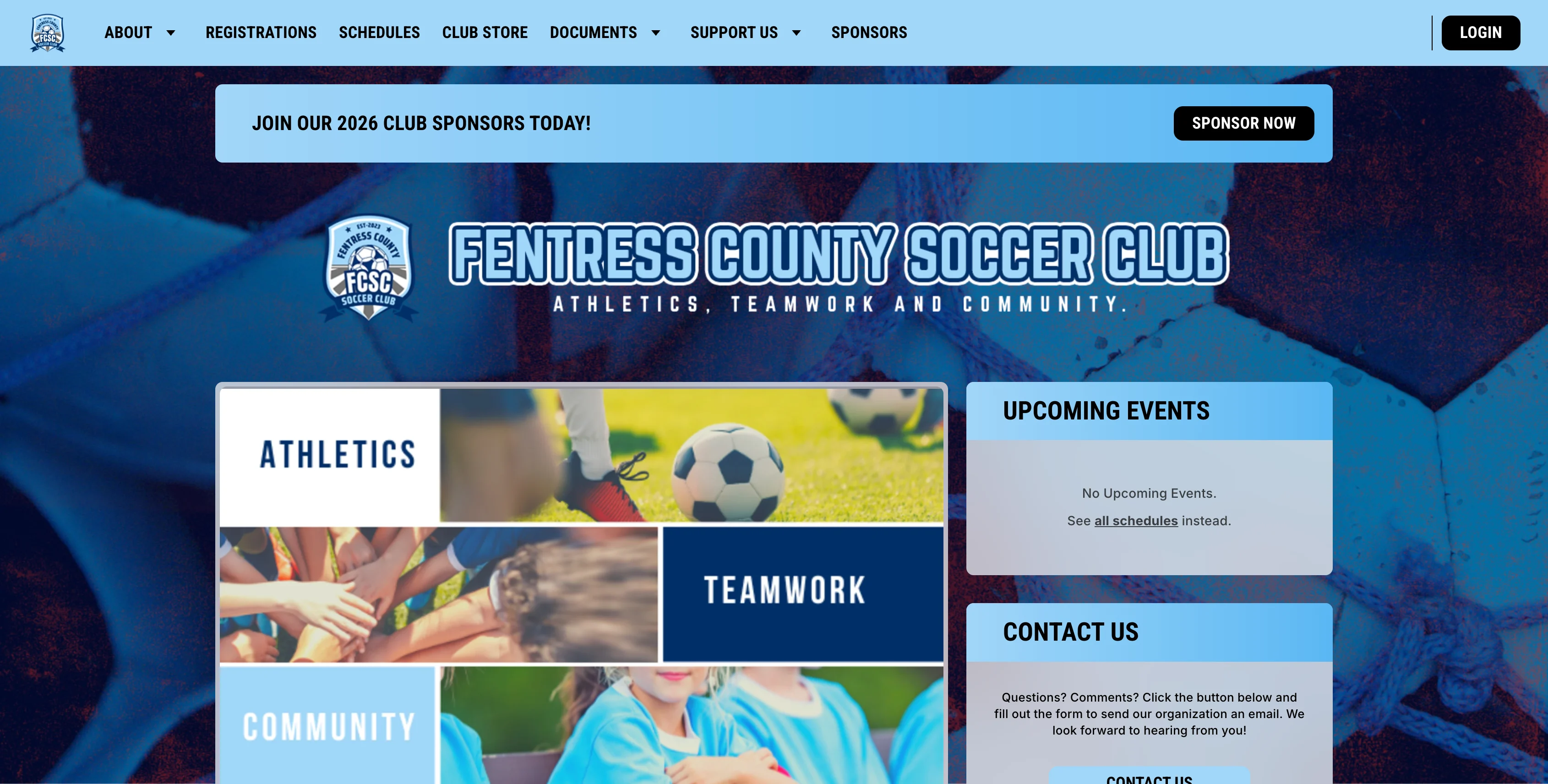
What they did: Put the club's history, coach bios, and photos from actual games front and center, so parents have something to evaluate before they commit.
Three elements do the work:
- An about or history section tells parents how long the club has been around and what it stands for.
- Board and coach bios put names and faces to the volunteers running the show, so parents know who's coaching their kid.
- Photos from actual games, not stock soccer images, show real players on real fields wearing the club's colors.
What to copy: These signals count most right before a parent submits a registration form. A history section, a face behind the coach title, and a few game photos answer the big questions, whether the club is legit, whether payment is safe, whether it's well-run, without a word of sales copy. If your site is missing any of these, that's an easy add. Jersey Watch's sports website builder makes it simple to add all three without touching any code.
5. Lawton Rocket Football for team communication
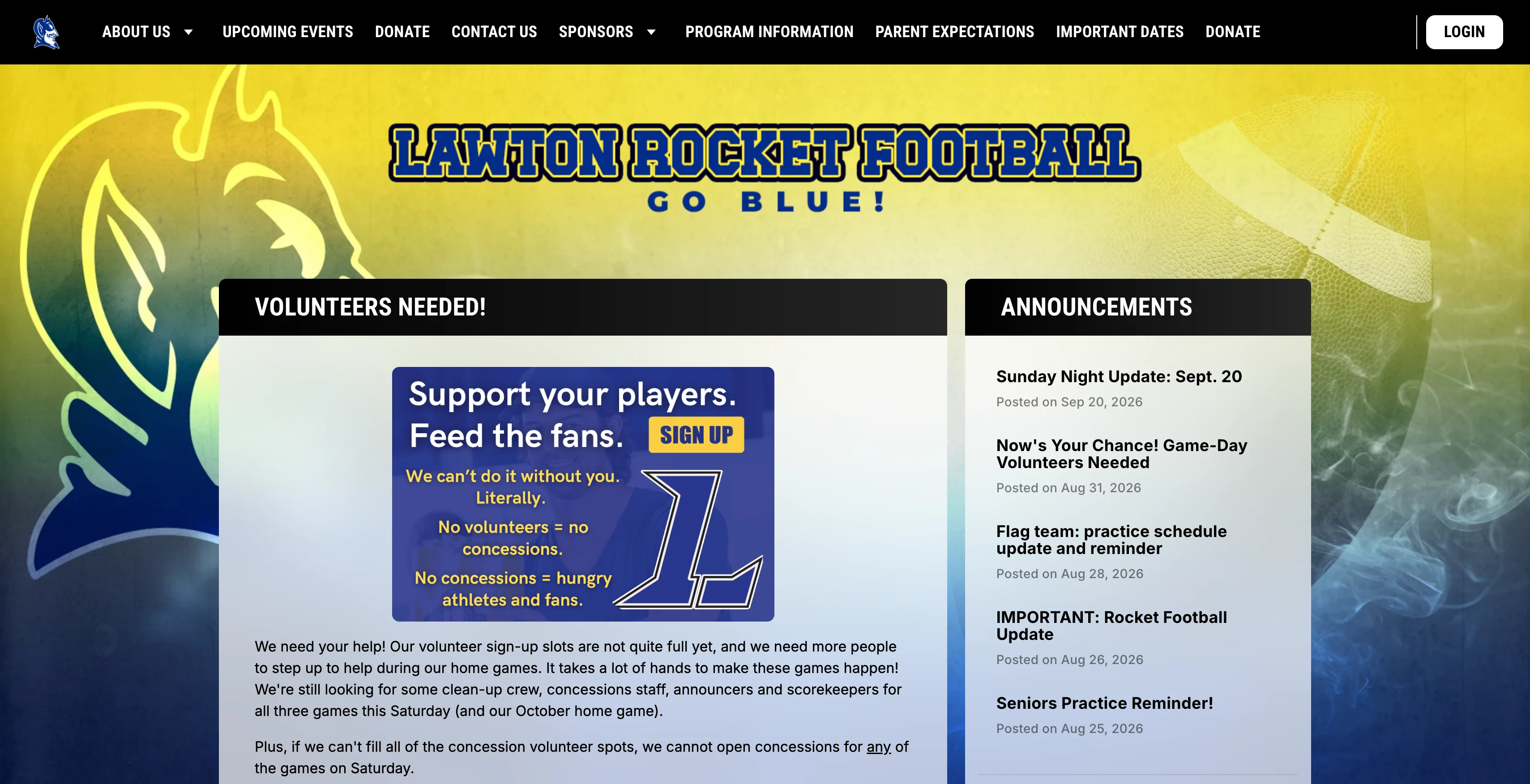
What they did: Put a single announcements module on the homepage so every update, from volunteer call-outs to game cancellations, lives in one place families can check without clicking around.
The range of what gets posted is what makes it work. Volunteer call-outs like "Now's Your Chance! Game-Day Volunteers Needed" go up alongside practice reminders. Game-day updates and broader organizational news get the same treatment. A parent trying to figure out whether Saturday's game is on doesn't have to scroll through a volunteer sign-up sheet to find out.
Five posts across roughly a month shows this isn't a page someone built in August and forgot about. Families learn to check it first instead of waiting for a text that might not come.
What to copy: Pick one page, post to it weekly, and stop splitting updates across email, texts, and social media. With Jersey Watch, volunteers can send those posted announcements out as emails and text messages so families can get messages directly to any device.
What the pros do differently
Three ideas from professional sports sites translate to the volunteer world:
- Lead with history for credibility.
- Keep calls to action front and center.
- Show proof that a program is worth joining.
What doesn't transfer is the production budget. Nike has cinematic video and global e-commerce. Manchester United, the Cincinnati Reds, and the Dallas Cowboys run broadcast-quality media operations built for tens of thousands of fans per game. Trying to copy any of that would burn a season's budget on a single homepage video.
The same ideas work at a fraction of the cost. A community league earns the same credibility a pro team gets from a franchise documentary, just from a simple "our story" section and a team photo. A plain, visible registration button does what a pro team's animated ticket-sale banner does. A few honest photos from last Saturday's game and a short parent testimonial do what highlight reels do. Same ideas, different scale.
Jersey Watch includes these extras for free
Every Jersey Watch subscription includes a custom domain, website design assistance, and content migration support at no extra cost. An in-house designer creates custom backgrounds and banners using your own branding.
Those extras sit on top of what every organization needs first: a website and online registration with payment collection. Other features that are part of paid plans include scheduling, communication, background checks, and fundraising tools.
Migration holds a lot of volunteers back from switching platforms. Nobody running a league in their spare time wants to rebuild a roster page or re-upload years of photos by hand. Jersey Watch's committed Customer Care team handles that transfer directly, and your website and registration can go live within one business day of signing up.
If you're currently stuck on a clunky platform or a patchwork of spreadsheets and paper forms, read through this breakdown of what to expect when switching sports management software before you commit to anything new.
Turn your favorite example into your own site
The consensus across all five examples is the same: clear registration, a domain that looks legitimate, and enough current information that parents keep coming back. None of it required a design agency or a big budget. It just required picking the right tool and keeping up with it.
Jersey Watch gives volunteer-run leagues exactly that starting point: a custom domain, built-in registration and payment collection, and a Customer Care team that can have your site live within one business day. Check out the full gallery of customer website examples to see more.
Ready to build? Launch your league's site and open registration.
FAQs
Do I need technical skills to build a website like these examples?
Building a site like these examples doesn't require any coding or design experience. Sports-specific platforms like Jersey Watch use pre-made templates and simple editing tools so any volunteer can update pages, schedules, and forms. Every subscription also includes website design assistance and free content migration, so new admins aren't left guessing at layout.
How much does it cost to build a sports website similar to these examples?
Costs vary by platform, but sports-specific builders typically cost far less than hiring a developer or agency. Jersey Watch costs $19 for the first month to launch a website and open registration. After that first month, it's $348 per year, with no setup fees and no contracts.
What's the difference between a general-purpose website builder and one built specifically for sports leagues?
General website builders like Wix or Squarespace offer flexible design tools but leave you to build registration, payments, and scheduling from scratch. A sports-specific builder bundles a website with online registration and payment collection already built in, so leagues don't need separate tools stitched together. That combination saves setup time and keeps parent-facing information, schedules, forms, and fees, all in one place.
How do I know if my league's current website needs a redesign?
A few clear signs point to a redesign: outdated season dates, broken links, or a layout that's hard to read on a phone. If parents can't find registration forms or schedules within a couple of clicks, the site is likely costing you sign-ups rather than earning them. Swapping to a sports-specific builder often solves these issues at once, since navigation, mobile display, and registration come built in from the start.
What happens to my registration data if I switch website platforms mid-season?
Switching platforms mid-season doesn't have to mean losing existing registrations or payment records. Reputable sports website builders offer free content migration, so player information and past registration data can transfer over without manual re-entry. Jersey Watch's Customer Care team handles that migration and can launch a new site within one business day of sign-up.

Tim GusweilerCo-Founder / CEO
Tim is the Co-Founder of Jersey Watch, where he works with the product, marketing, and customer support teams to build software for youth sports organizations. He writes about youth sports management based on years of experience working with league administrators, coaches, and volunteers, along with a lifelong passion for sports.


