7 Of the Best Youth Sports Websites (And Why They Work)

Sierra Swigert Last updated: October 14, 2026

Table of Contents
A volunteer board meets on a Tuesday night to sort through paper sign-up sheets, a Facebook post asking who still owes fees, and a group text about a rained-out practice. Nobody knows which version of the schedule is current. Half the parents never saw the Facebook post.
Does this sound familiar? If so, you’re not alone. What most leagues actually need is a single, easy-to-find place where parents, coaches, and players can register, pay fees, check schedules, and get updates. That's what the best youth sports websites deliver, and it's why so many leagues are searching for them instead of patching together another spreadsheet.
Seven organizations built that kind of site, and each one solves a different piece of the puzzle: registration that doesn't require a follow-up phone call, a schedule parents check, and a homepage that makes a small league look organized. This roundup walks through all seven, points out the essential pages each one gets right, and gives you a simple way to figure out which approach fits your own league before you build anything.
The pages every strong site needs
Online registration and payment collection are front and center on a strong youth sports website. From there, it needs just a few more pages: a schedule or events page, staff or coach information, and a contact page so families know how to reach out.
Registration deserves that top spot because it's where families decide whether to commit. A key part of getting someone to sign up is to make sure the form is one that everyone can use. ADA guidance calls on organizations serving the public to make online forms accessible to people with disabilities, and registration is that kind of form. Following that standard is good practice for any league, regardless of legal status.
Fees are just as important as accessibility. With youth sports costs on the rise, more families are weighing participation. List fees clearly on the registration page so parents see the total cost upfront, instead of discovering an add-on charge halfway through checkout. Transparency builds trust and cuts down on abandoned registrations.
Once those core pages are good to go, sponsorship and donation pages make a smart next step. They're worth adding, but they're not needed at launch.
Which example fits your organization?
Scan this table for your sport and organization type, then start with the example that aligns most closely to how your program runs.
Organization | Sport | Organization type | Age Groups (approximate) |
Thunder Soccer Club | Soccer | Nonprofit youth club | 3–14 years old |
Boulder Bears Football | Football | Nonprofit multi-team program | 9–14 years old |
Sutherlin Valley Recreation | Multi-sport | Regional recreation program | Youth groups, varies by sport |
Moore Wrestling | Wrestling | Multi-age wrestling program | 5–18 years old |
Desoto Baseball Organization | Baseball | Multi-team organization | 3–18 years old |
Avon Youth Lacrosse | Lacrosse | Year-round lacrosse organization | 5–14 years old |
Hilton Select Basketball | Basketball | Travel team | 8–14 years old |
An exact organization type match isn't required. A single-sport club can still learn from a multi-sport recreation site, and a travel program can pick up ideas from a rec league's registration setup. The sport match is more important than the organization type, since navigation, division structure, and schedule layout tend to follow the sport itself. A wrestling program and a basketball program organize their pages differently, even if both are select-level clubs.
Read the profile for your closest sport first, then skim one or two others for ideas you can borrow, like how Desoto Baseball Organization separates coach and parent pages, or how Avon Youth Lacrosse groups recreational and club team information together.
If none of these examples closely resembles your sport or setup, Jersey Watch's full gallery of customer website examples covers a wider range of sports and organization sizes, so you can keep looking until you find a layout that fits how your league or club operates.
How we picked these 7 examples
We chose these seven youth sports website examples from current Jersey Watch customers to cover seven different sports and several organization types, from single clubs to multi-sport recreation organizations.
Popularity and participation shift by sport and by region from one season to the next, and the trend toward early sport specialization only adds to that variability. That's why this list spans several sports instead of leaning on just one or two.
Each profile points out the specific structural choices worth borrowing for your own site. Descriptions are written at the time of publication so click each link to see the most updated website content.
1. Thunder Soccer Club
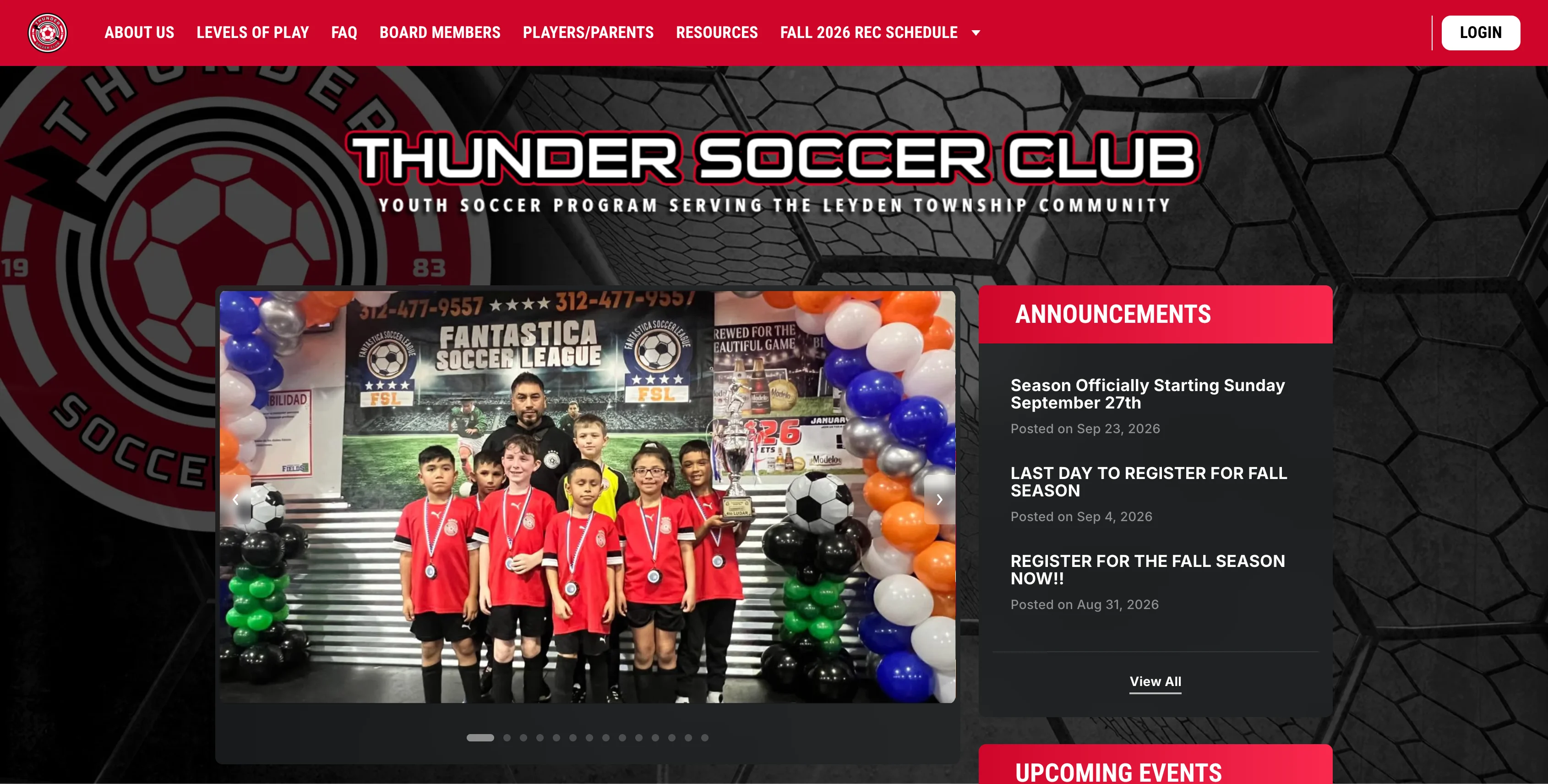
Thunder Soccer Club is the soccer example on this list, and its live site shows an active recreational schedule organized by age group. Families can pull up game dates and times for their child's age group without hunting through a single long list for every team in the club.
Why their website works:
- Frequently asked questions live in the top navigation bar so parents can easily find key information without having to browse through multiple pages or reach out to the club’s volunteers.
- The schedule stays current, which is important for a fall season where game dates and fields can shift week to week.
For a club running multiple age groups off one site, that combination of organized navigation and a visible schedule page does most of the heavy lifting. It's a simple structure, but it's the right one for a club with this many teams and this many parents checking in at once.
2. Boulder Bears Football
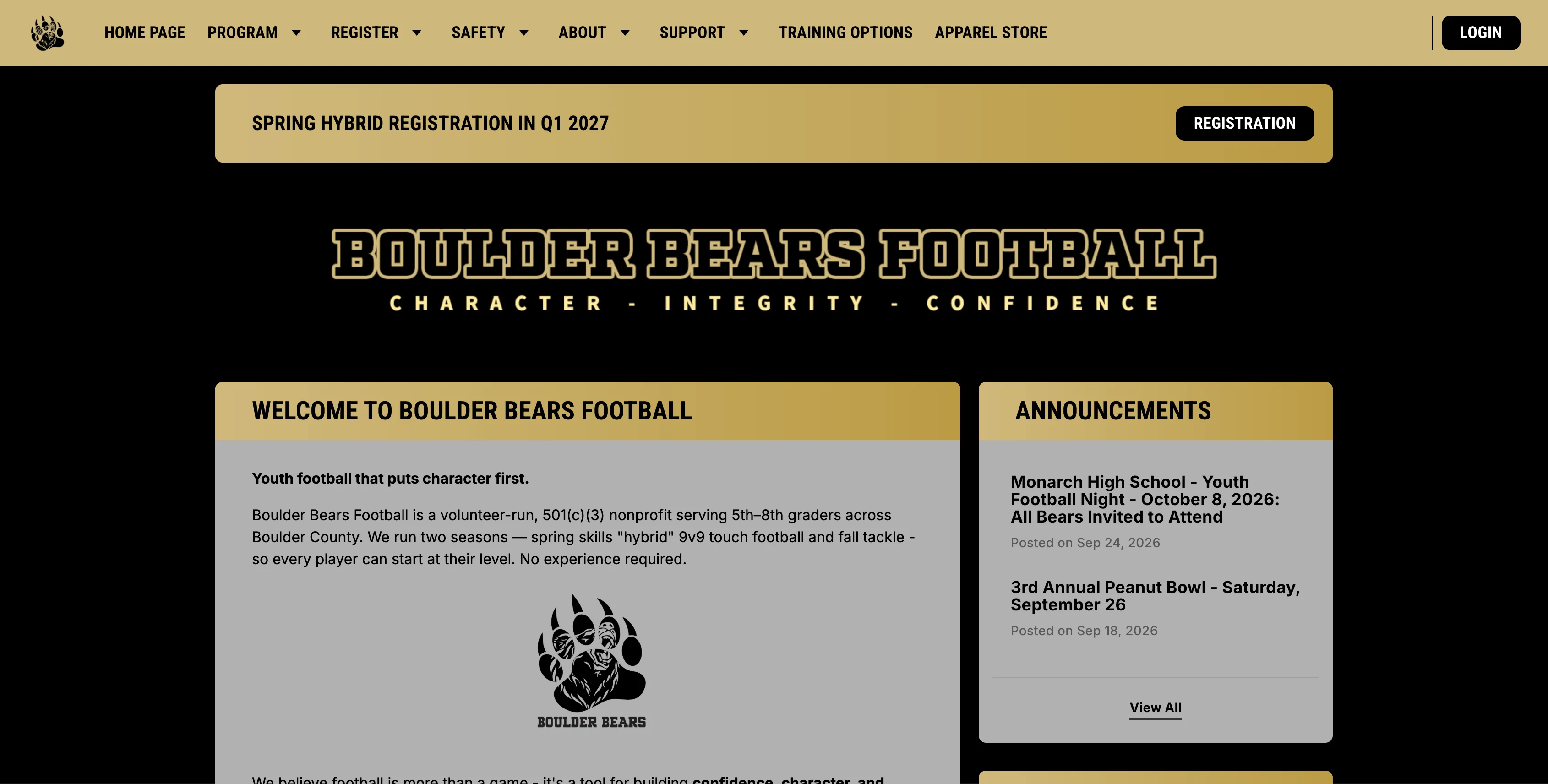
Boulder Bears Football is the football example on this list, and its website makes room for two very different seasons: spring skills "hybrid" 9v9 touch football and fall tackle. That split is key for football, where kids show up with wildly different comfort levels around contact. A player can start in spring touch to hone their skills, then move into fall tackle when they're ready, and the website lays out both paths clearly instead of forcing one entry point.
Boulder Bears Football is a volunteer-run, 501(c)(3) nonprofit serving 4th through 8th graders across Boulder County, which means the site has to organize multiple squads. The website handles this by grouping teams by season and grade level, so a parent looking for their fifth grader's spring roster isn't scrolling past fall varsity tackle information to find it.
Why their website works:
- Registration is easy to find no matter which season or team a family is looking for.
- Their Program Overview page walks parents through the difference between the two programs such as age groups, season timing and registration fees.
For programs weighing how to structure something similar, this guide to building a football website walks through the setup step by step.
3. Sutherlin Valley Recreation
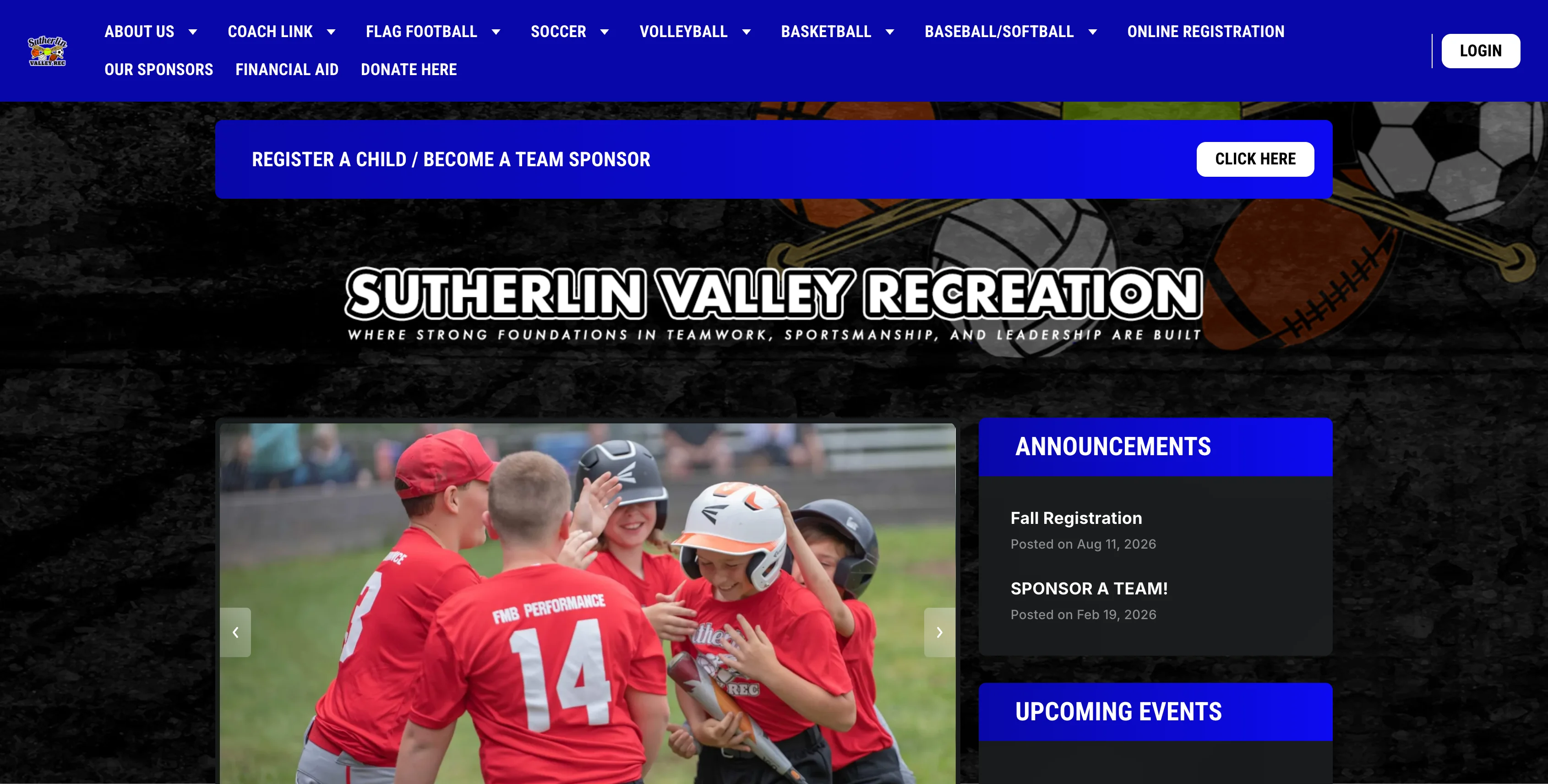
Sutherlin Valley Recreation's website gives a regional, multi-sport program one shared registration hub and information center instead of separate sites for each sport. It's the multi-sport example on this list, running programs for the Sutherlin and Oakland, Oregon communities under one regional recreation site.
Instead of building separate sites for baseball, softball, soccer, volleyball, and basketball, Sutherlin Valley Recreation runs everything through one shared registration hub. Families pick a sport and register in the same place, on the same website, every season. That's the advantage of a regional program setup: one login, one home base, and no guessing which site handles which sport.
Why their website works:
- Visible acknowledgments of the local school district reflect the field and gym access that makes multi-sport scheduling possible.
- Sponsor recognition appears clearly on the site, giving local businesses a reason to keep supporting the program.
None of this requires a complicated setup. If your organization runs more than one sport out of the same community, this is the model worth studying.
4. Moore Wrestling
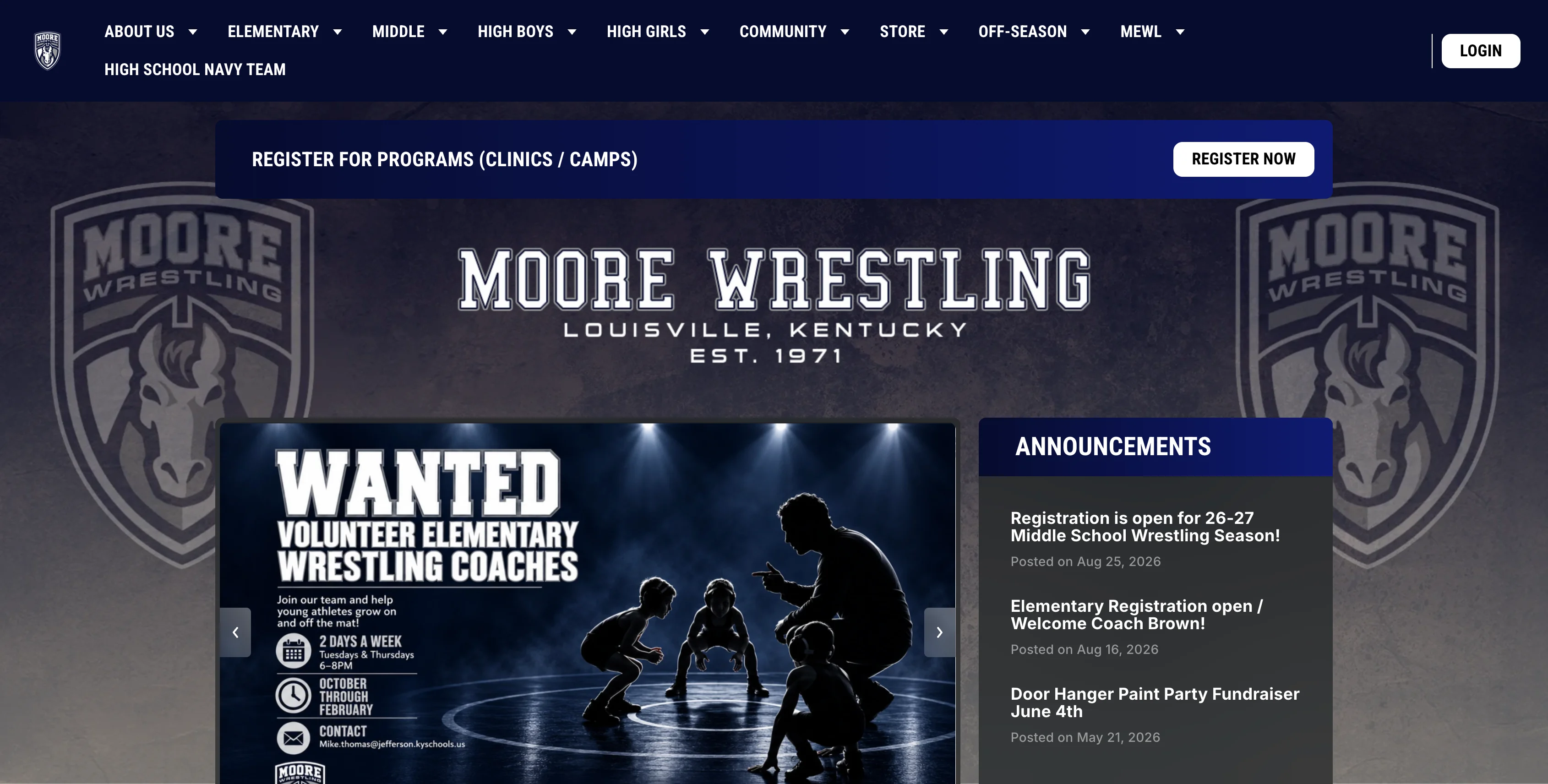
Moore Wrestling's website works because it organizes registration and schedules by level, helping families move quickly to the right page for their wrestler. It's the wrestling program on this list, and its site hosts information for a full pipeline of participants, from elementary schoolers just learning the basics through high schoolers competing on the varsity level.
The site organizes that range into dedicated Elementary, Middle School, and High School sections, each with its own registration form and its own schedule. A parent with a third grader doesn't have to dig through varsity match dates to find a practice time, and a high school family doesn't have to guess which registration link applies to their wrestler.
Why their website works:
- A dedicated girls' wrestling section sits alongside the boys' programs, giving that growing part of the sport its own visible home rather than folding it into a shared page.
- A family with kids at different ages only has to check one place.
For clubs working to grow participation at any of those levels, this guide to recruiting more youth wrestlers covers practical ways to fill out a roster once the site is ready to support it.
5. Desoto Baseball Organization
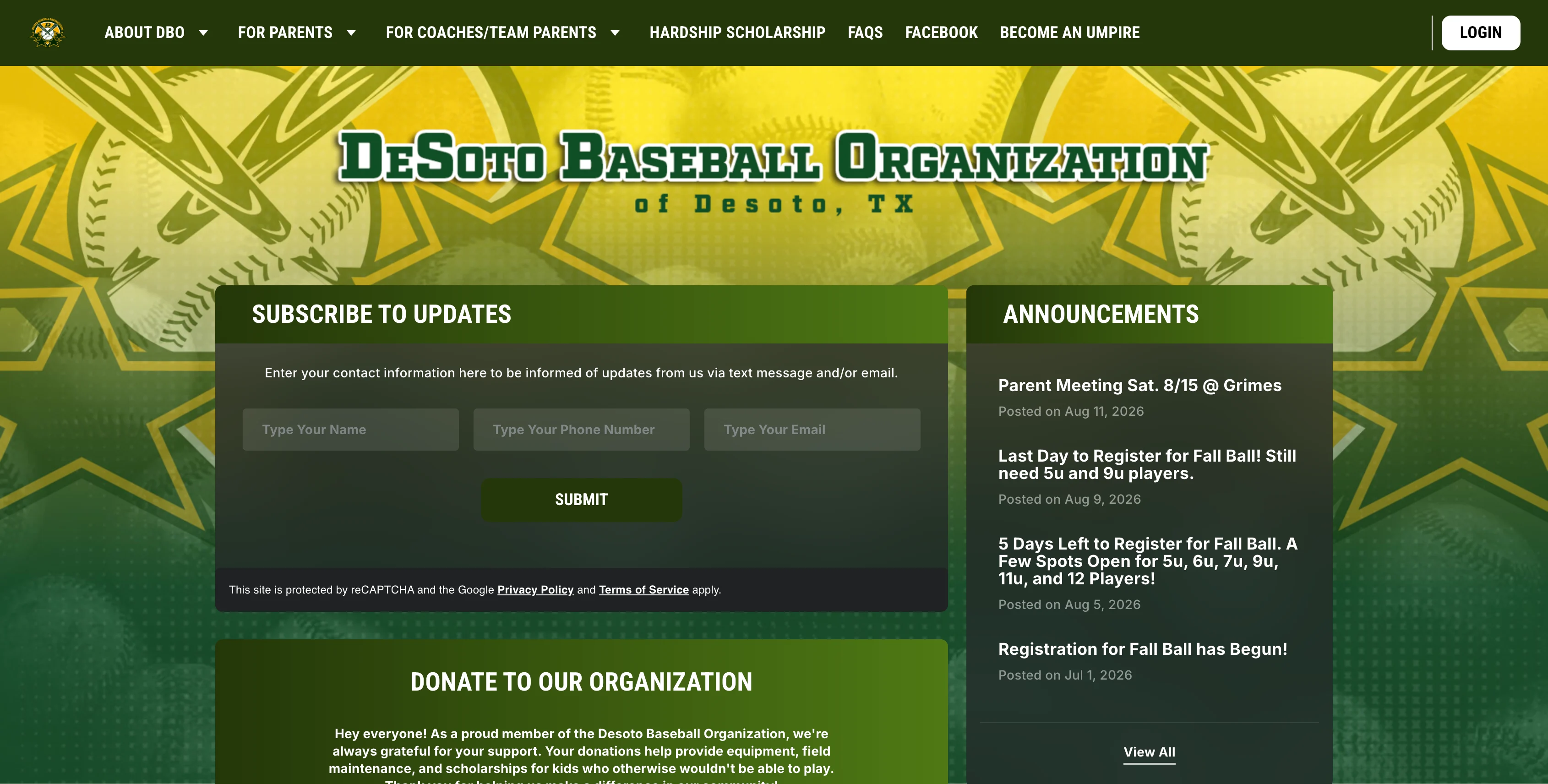
Desoto Baseball Organization's website shows a homepage stacked with recent season announcements, proof that someone is logging in and keeping things current instead of letting the site go stale after opening day.
The site also splits its information by role. A Team Parents page covers what families need: schedules, expectations, and season logistics. A separate Coaches/Assistant Coaches page contains the details that matter to the dugout, like coaching resources and responsibilities. Instead of stuffing everything onto one long page and hoping visitors sort it out themselves, Desoto lets parents and coaches head straight to the page built for them.
Why their website works:
- Under the About dropdown, they list Registration Fees by season, age and residency to make pricing easy to understand.
- Navigation is organized by age division, keeping each team's schedule separate instead of producing one long combined list.
That combination builds trust over a season. When a website looks abandoned, parents assume the information on it is old too, and they start calling or texting the league instead of checking online. When it's updated regularly, families learn to rely on it first.
6. Avon Youth Lacrosse
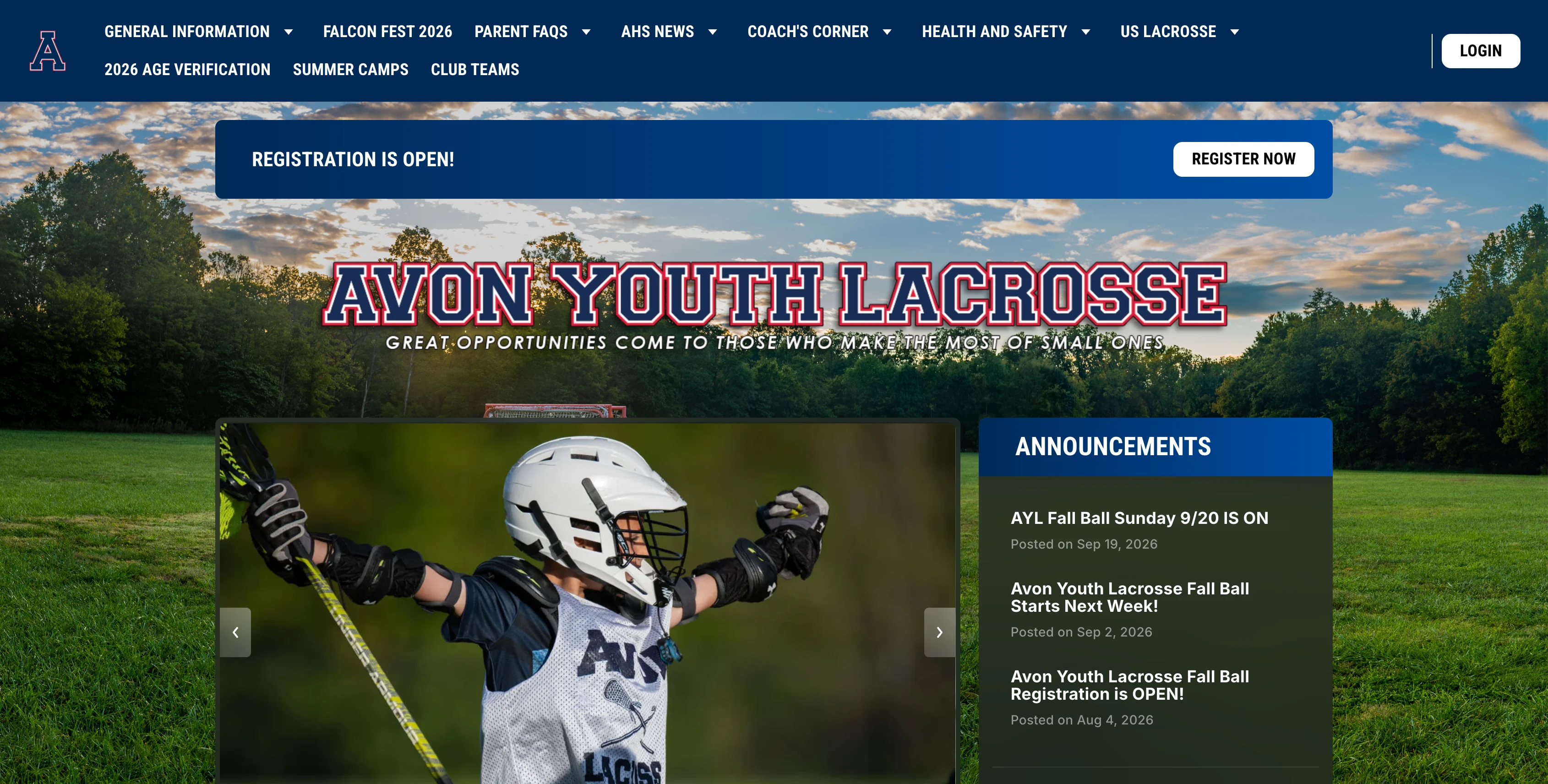
Avon Youth Lacrosse is the lacrosse example on this list, and its website brings recreational registration, summer camps, and competitive club team information into one organized destination.
Lacrosse programs often run several tracks at once: a rec season open to all skill levels, summer camps for skill-building, and club teams for players chasing a more competitive schedule. Avon keeps these separate on the site instead of burying them on one crowded page. A dedicated summer camps page sits apart from regular-season programming, so a parent looking for a week-long camp doesn't have to dig through club team rosters or league schedules to find it.
Why their website works:
- Open seasonal registration announcements, like a Fall Ball schedule updates appear front and center so families don’t wonder whether an event is happening.
- Club team pages are organized by season and roster, giving competitive families a clear view of who's on which team and when they play.
Clubs weighing how to structure this kind of program from scratch can find more groundwork in this guide to starting a lacrosse club.
7. Hilton Select Basketball
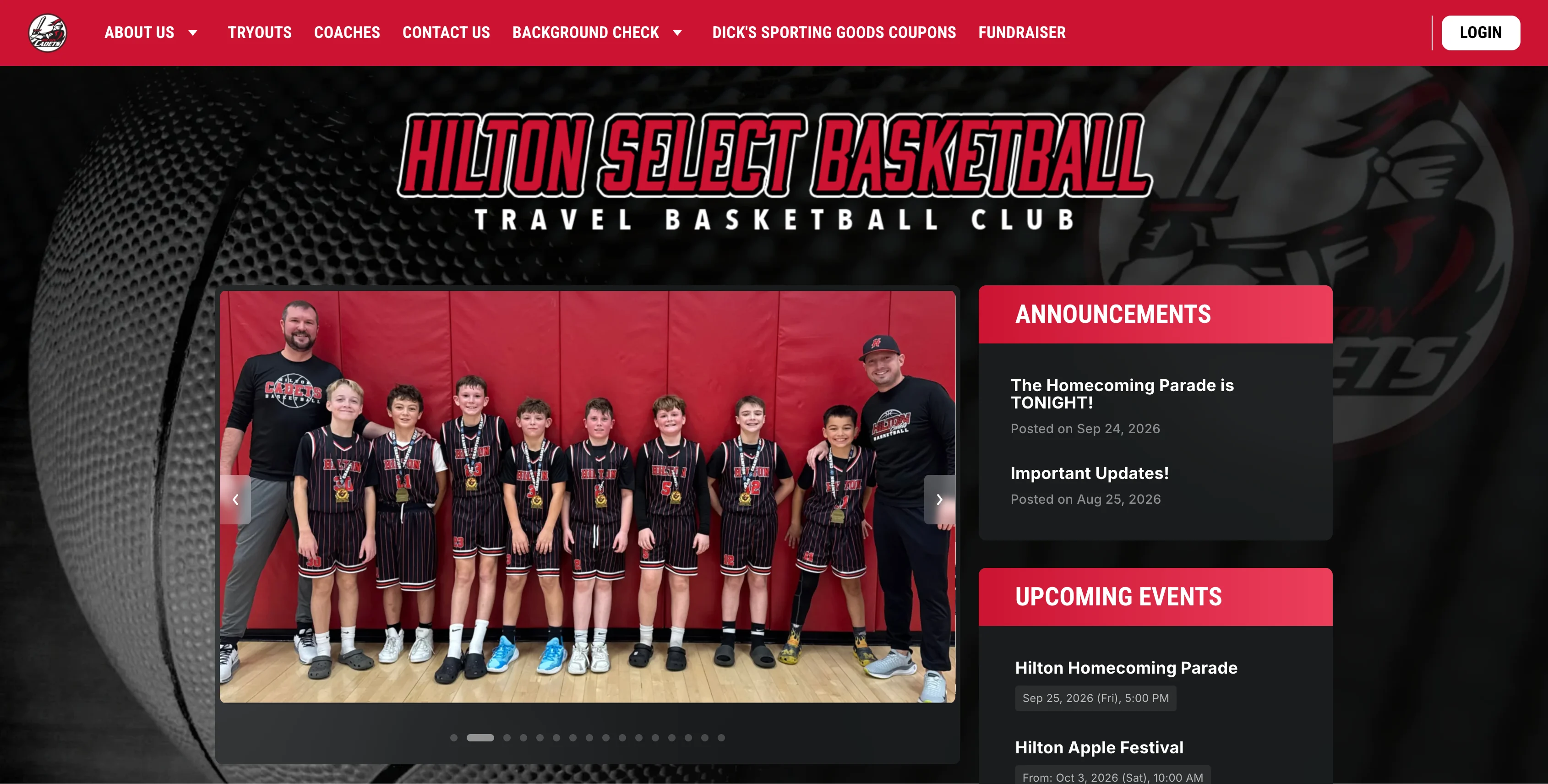
Hilton Select Basketball is the select and travel example on this list, and its website looks different from the recreational sites above because its families arrive with different questions. They aren't asking "which age group do we register for?" They're asking "did our kid make the team, and where do we play next weekend?"
The site answers the first question with a dedicated tryout page. Dates, requirements, and next steps sit in one spot, so parents aren't emailing coaches to figure out how selection works or when results come out.
Once a player makes a team, the travel schedule takes over. Games and tournament weekends post in one place families can check without a group text.
Why their website works:
- A clear registration path moves committed families from tryout to paid roster spot without extra steps.
- The events listing on the homepage makes it easy for parents to see what important events are coming soon.
If your program runs tryouts and travel teams, a basketball-specific layout can save setup time. Jersey Watch's basketball website template gives you that starting structure, so you can organize tryout dates and travel schedules instead of building pages from scratch.
What's included with your website
Every example on this list illustrates the same point: the leagues with the strongest sites didn't overbuild. They nailed a clean website and easy registration, then added scheduling or communication when their organization was ready.
Jersey Watch was built around that same idea. Every subscription includes a custom domain, free design and migration help, and a launch commitment: your site and registration go live within one business day, with accessibility built in from the start.
You don't need an IT department to get there, just a plan and a little support. Ready to see how simple your season could look? Create your league's website this week.
FAQs
How often should a youth sports website be updated to stay useful for parents?
A youth sports website works best when someone updates schedules, rosters, and announcements at least weekly during the season. Parents check most often right before games and practices, so stale information erodes trust quickly. Off-season, a monthly check-in to refresh contact details and upcoming registration dates keeps the site ready for the next cycle.
What's the difference between a sports-specific website builder and a general-purpose builder like Wix or Squarespace?
General-purpose builders like Wix or Squarespace serve any type of business, so registration and payments often need separate add-on tools. A sports-specific platform builds registration and payments directly into the website, so families register and pay in one place. That saves volunteer boards setup time and keeps rosters and schedules connected to the same site.
Can a youth sports website actually help increase registration numbers, or is it mainly for sharing information?
A clear, easy-to-find registration page can reduce the number of families who start the process but drop off before paying. As youth sports costs continue to climb, transparent fees and a simple checkout process may help hesitant families follow through. A well-organized site also builds the kind of trust that encourages returning families to register early each season.
What happens if our organization already owns a domain name from a previous website?
You can typically connect an existing domain name to a new website builder instead of purchasing a new one. Most platforms, including Jersey Watch, let organizations point an existing domain to the new site as part of setup. This keeps the address families already recognize while still gaining the professional design and registration features of the new platform.
Is a mobile-friendly design necessary, or is a desktop-focused site good enough for parents?
Mobile-friendly design is essential, since most parents check schedules, registration deadlines, and announcements from their phones between practices and games. Accessibility guidelines like WCAG address mobile usability directly, covering things like readable text size and tap-friendly buttons on smaller screens. A site that only works well on a desktop risks losing busy parents who never open it on a laptop.

Sierra SwigertOperations Manager
Sierra Swigert is the Operations Manager at Jersey Watch. She works directly with youth sports organizations every day and writes educational resources based on her firsthand experience supporting league administrators and volunteers, as well as her background competing in cross country and track.


