
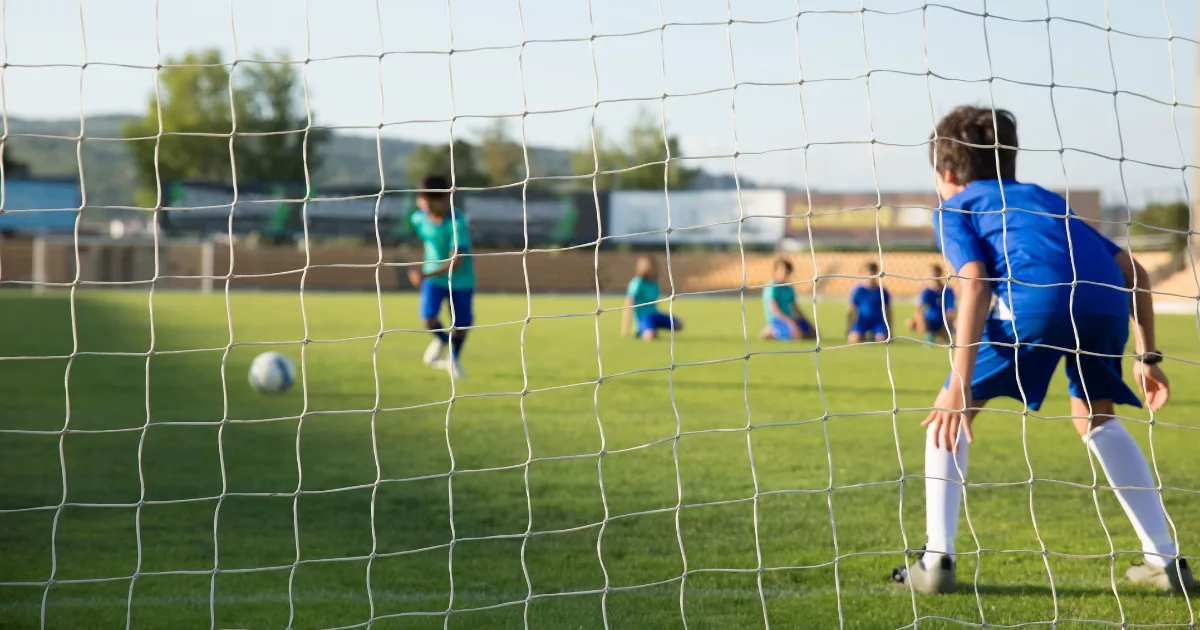
The fast pace of soccer is a big draw for kids who like to move. Youth soccer defensive drills are practice activities that help young players slow down attackers, hold their position, move their feet, and either win back the ball or safely delay the attack. While charging down the field to score a goal is a dream for many players, teams need to work on defense too. After all, if the opposing team can't score against you, they can't win.
As a coach, you can change up defensive drills to make practice fun and engaging for your youth soccer players. Make drills a routine part of each practice, along with instruction based on recent games and scrimmages. That way, your young players will know what to expect and be ready to focus at practice time.

What defensive skills should youth soccer players learn?
Young defenders should learn to slow attacks, steer players wide, tackle decisively, stay on their feet, and keep a positive mindset. To build an effective team, you need to teach your young players essential defensive skills. Make sure team members know that they should try to keep the ball out of your team's penalty area to limit scoring opportunities for the other team.
There is a lot to know to be an effective defender in soccer. But you can get your youth player on the right trajectory by teaching them these defensive concepts.
How can defenders slow down an attack?
Defenders can help their team by delaying attackers even when they do not win the ball right away. For defenders, winning back the ball is always valuable. Delaying the other team's route to the goal can allow other team members to catch up and put more pressure on the attacking team.
How can a defender slow down an offensive attacker? Teach your defenders to stand up to attackers and get in their way. It's a simple strategy that can go a long way for young players!
Why should defenders steer attackers to the sideline?
Steering attackers to the sideline makes it harder for them to attack the goal from the middle of the field. A critical skill every defender needs to learn is how to guide attackers to the sidelines. Why is this important? It's harder to score from the sidelines than in the middle of the field.
Attackers may need to make a move to the center of the field or cross the ball into the box to make a threat. Plus, pushing attackers to the sidelines is a great delay tactic that can give more teammates time to reach the defensive end of the field.
It's not hard for players to learn how to steer opponents to the sidelines, but it does take practice. Soccer drills for kids can help defenders develop this essential skill.
How should young players learn to tackle?
Young defenders should approach quickly, stay under control, and commit decisively when they choose to tackle. Tackling is a tactic to dislodge the ball from an attacker so that your team regains possession. While defenders can keep possession after a tackle, that's not their primary goal. Their aim is to get the ball away from the other team.
Coach defenders to approach attackers quickly, then pull up. They may want to stand up to the opposing player and wait for a mistake or choose to tackle. When committing to a tackle, players need to act decisively without any hesitation.
Why should defenders stay on their feet?
Defenders are usually more useful when they stay upright and can recover quickly. Lots of younger players are eager to try out slide tackles or head balls. While these skills look impressive, they can create problems if poorly timed or executed. It's easy for an attacker to rush past a defender on the ground and charge the goal.
Coach players to stand up and resume play right away if they fall or slide tackle.
How can defenders keep a positive mindset?
Defenders should expect occasional mistakes and focus on the next play. Even the best defenders in the world get beat by attackers. And top teams give up goals to opponents. Defenders need to learn to keep their emotions in check and not let setbacks distract them.
If defenders lose their cool, they may make a careless mistake or foul that gives an advantage to opponents.
What youth soccer defensive drills help build a strong defense?
Four youth soccer defensive drills that help build a strong defense are the 1v1 defending drill, agility defending drill, defensive footwork drill, and triangle defending drill. When coaching soccer, you need to have drills prepared before each practice. That way, you can ensure you have the right equipment on hand and let your players know what to expect.
Here are four straightforward defensive drills that you can use with your young players.
How do you run a 1v1 defending drill?
This drill teaches one defender to stay in front of one attacker and guide the attacker wide. This two-player drill requires only a few cones and a soccer ball. Once you teach it in practice, your players can easily replicate it at home with a partner.
- Players: Use one attacker and one defender.
- Equipment: Set up a few cones and use one soccer ball.
- Goal: The defender works to stay in front of the attacker and guide the attacker toward the sideline.
It teaches young players how to stay in front of attackers and to help guide them to the sidelines.
How do you run an agility defending drill?
This drill helps defenders move quickly while trying to stop attackers from reaching a cone-marked endpoint. Agility is essential for both defenders and attackers, and this drill can help.
- Players: Divide your team into two groups, with one group attacking and one group defending.
- Equipment: Mark an endpoint with two cones.
- Goal: Attackers try to reach the endpoint within five seconds while defenders try to stop them.
How do you run a defensive footwork drill?
This drill helps players practice quick changes of direction and controlled movement around cones. Set up a short cone pattern to guide players through the sequence below.
- Players: Have players run the drill one at a time.
- Equipment: Use four cones about two yards apart, one cone five yards away, and one final cone seven yards beyond that.
- Goal: Players start at the first cone, charge each of the following three cones, circle around them, run through the next cone, pause briefly, and sprint past the final cone.
How do you run a triangle defending drill?
This drill helps players practice sideways movement, backpedaling, and reconnecting with the ball. This individual drill requires three cones set up in a triangle shape.
- Players: Have players run the drill one at a time.
- Equipment: Set up three cones in a triangle shape and use one soccer ball.
- Goal: Players knock the ball sideways the length of the triangle, backpedal around the tip of the triangle, and connect with the ball on the other corner.
How can coaches prepare defensive drills for next season?
Coaches can prepare by keeping a short list of fun defensive drills and rotating them into each practice. Every youth soccer coach needs to make each practice fun and motivational while helping young players build new skills. Whether you coach recreational players or a select team, having a go-to list of defensive drills is a must.
Start with the ones we've outlined here and keep adding new drills to your team's repertoire. Include a few different drills in each practice to keep players engaged. You can also teach drills that require minimal equipment or none at all so that players can practice on their own and grow into better soccer players.
If your league is getting ready for another season, get started free with Jersey Watch to make registration, schedules, and team communication easier to manage.
FAQs
What are good youth soccer defensive drills?
Good youth soccer defensive drills include the 1v1 defending drill, agility defending drill, defensive footwork drill, and triangle defending drill. These drills help players practice staying in front of attackers, moving their feet, and delaying the play. They are also easy to rotate into practice because they use simple setups and clear coaching goals.
How do you teach young soccer players to defend 1v1?
Teach young soccer players to defend 1v1 by helping them stay in front of the attacker first. The defender should slow the attacker down and guide them away from the middle of the field. This gives teammates more time to recover and puts the attacker in a tougher spot.
Why should defenders steer attackers to the sideline?
Defenders should steer attackers to the sideline because it makes the scoring angle tougher. It also slows the play and can force the attacker to make another move before becoming dangerous. That extra time gives teammates a chance to get back and help defend.
Should young defenders slide tackle?
Young defenders should focus on staying on their feet before trying slide tackles. A poorly timed slide tackle can leave a defender on the ground while the attacker keeps going. If a player falls or slides, coach them to stand up and resume play right away.

Courtney CalvoCustomer Care Team Lead
Courtney Calvo is the Customer Care Team Lead at Jersey Watch, where she helps youth sports organizations get started with registration, websites, and league management tools. She brings both professional expertise supporting leagues and firsthand experience as the parent of a youth soccer player.


