Best Tools To Organize Team Rosters After Registration

Nick Rattermann Last updated: October 15, 2026
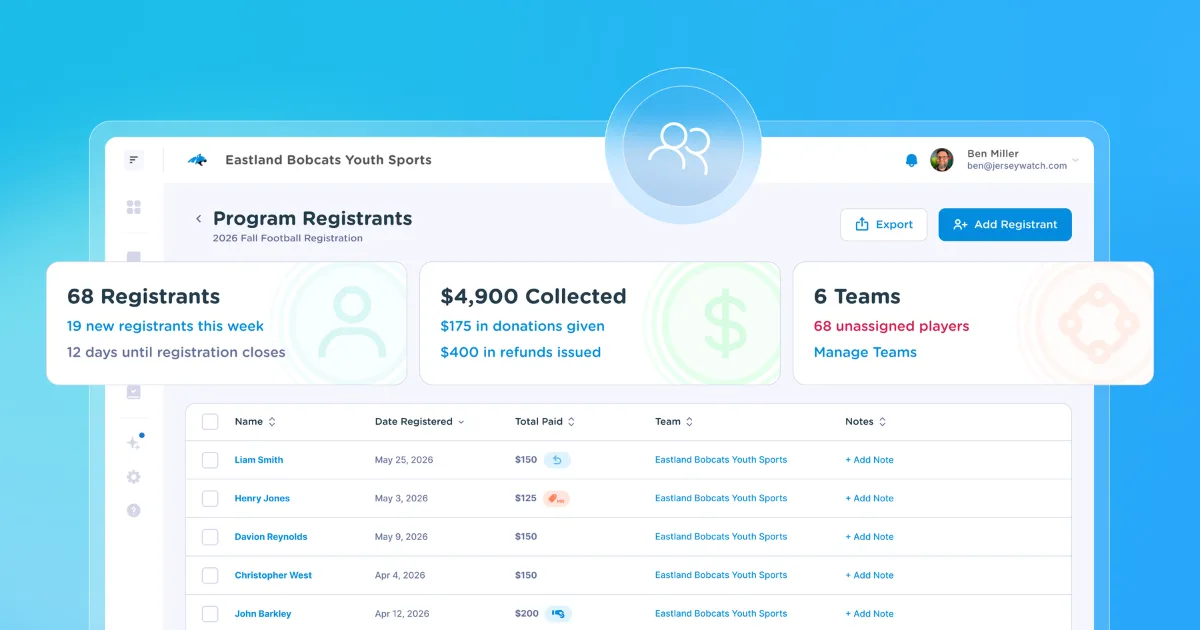
Table of Contents
Registration just closed, and now you're staring at a spreadsheet full of signups, wondering how those names turn into actual teams with the right coaches, paid fees, and eligibility checks all lined up.
That gap between "registered" and "ready to play" is where most volunteer boards spend too much time. Tools to organize team roster information solve that problem: they're systems that turn completed registrations into team assignments while keeping player details, payment status, eligibility, coach assignments, and schedules all connected, so nobody re-enters the same family information three different times.
You'll walk away knowing what to look for and what your current setup might be missing.
Why a spreadsheet breaks down once registration closes
Spreadsheets become difficult to trust after registration closes because team assignments, payment updates, and family messages all require volunteers to copy and reconcile the same player data across separate places. A signup sheet is fine for collecting information. But it's not built to stay accurate once that information starts moving.
Youth sports leagues aren't shrinking, so this problem isn't going away. Team sport participation among kids ages 6–17 grew 6% in 2024, and 65% of kids tried a sport at least once that year. More players mean more rows to sort, more coaches to notify, and more chances for a spreadsheet to fall out of sync.
Picture a Tuesday night where a board member copies new registrations into a "teams" tab, then into a separate "payments" tab, then texts three coaches to ask who still owes a fee. Each copy-paste is a chance to miss a name or duplicate one.
Start by listing every spot where you currently retype or re-check player data after someone registers. If you're still setting up that first spreadsheet, Jersey Watch's roster template guide is a good starting point on the way to a finished roster.
What a roster organization tool should do
A useful roster organization tool connects registration and payments, gives families website access, supports team assignments, shows player and coach statuses, and enables communication and scheduling while keeping youth data secure.
- Registration data feeds directly into rosters.
- Payment and eligibility status update automatically.
- Website access lets families see current information.
- Team assignments sync with schedules and messaging.
- Privacy controls protect player and family details.
Jersey Watch's registration features checklist is a solid resource to run through during any trial or demo.
Once you've confirmed the basics, put the tool through three tests: grouping players into teams, spotting statuses at a glance, and managing multiple teams at once.
Grouping registered players into teams without retyping data
Player and contact information from a completed signup form should flow straight into team assignments instead of a fresh spreadsheet row you have to build from scratch.
The workflow follows a simple order:
- Review your completed registrations to confirm the season's signups are in.
- Filter registered players by necessary criteria (age, division, grade) so you're only looking at the group you're placing.
- Group those filtered players into teams using the registration data you already collected.
Once you've placed players on teams, you can build schedules and communications around each team roster so it’s easier to reach the right families with the right information without recreating a new list from scratch every time.
With Jersey Watch's team management tools, you can create teams during or after registration, assign registrants to teams and share rosters with coaches and other admin. Team assignments are created manually and can be done by hand selecting athletes, bulk assigning via filters or through random selection.
Seeing payment and eligibility status at a glance
A roster tool should show registration, payment, and eligibility status next to each player's name before teams are finalized. Volunteers can see who's signed up, who's paid, and who's completed all required forms.
Before: You're checking a payment spreadsheet, then a separate registration list, then last week's group text to figure out who's eligible to play.
After: You open one current roster and see it all at once instead of cross-referencing multiple lists.
This matters most at two moments. Draft night gets a lot easier when you can filter for unpaid registrations before assigning anyone to a team, so nobody ends up placed and then pulled later over a missing fee. The same goes for publishing team pages. Checking player status right on the roster before those pages go live means you're not scrambling to pull a name down after the fact.
Managing multiple teams and age groups in one season
Large, multi-team leagues need one roster system that sorts and updates players by division, age group, season, and coach without affecting unrelated teams. Without that structure, volunteers lose track of who belongs where and who's coaching them.
A league running 40 teams across eight divisions can't afford to hunt through one giant spreadsheet every time a player moves up an age group or switches teams. Generic task tools weren't built for that kind of layered sorting, and they tend to fall apart once you're juggling multiple seasons at once.
Before committing to a system, make sure you can test if it’s built for large leagues. Platforms like Jersey Watch are built for small to mid-size organizations so its roster tools may not be built for larger leagues.
Free tools versus purpose-built platforms
Free tools can absolutely handle one small team with a simple set of needs, but growing leagues usually need a purpose-built sports platform that keeps everything connected. A single coach jotting down 10 kids' names and phone numbers doesn't need much muscle. A volunteer commissioner juggling multiple teams, age groups, payment records, messages, and schedules needs those pieces working together in one place instead of spread across five different apps.
The table below compares the two approaches on the tasks that matter most for roster organization:
Category | Free tools | Purpose-built platform | Best fit |
Data entry | Manual retyping from forms or texts | Pulls directly from registration | Any org collecting online signups |
Roster updates | Edited by hand, one team at a time | Updates flow across linked records | Leagues with more than a few teams |
Payment status | Tracked in a separate sheet | Shown beside each player's record | Anyone chasing unpaid fees |
Parent messaging | Group texts or personal email | Built-in messaging tied to rosters | Multi-team communication |
Scheduling | Shared calendar, manually updated | Connected to teams and rosters | Programs with games and practices to juggle |
Privacy | Limited controls over youth data | Built-in protections and permissions | Any organization handling minors' information |
The right choice usually comes down to three things:
- How many teams you run
- How many hands touch the data
- How much manual updating you're willing to do every week
A single-team coach with no payments to track can stick with a free spreadsheet or app. A league with multiple divisions, coaches, and payment plans will spend less time reconciling records with a platform built to keep those pieces linked.
If you want to compare specific products by name, Jersey Watch's TeamSnap alternatives guide and the sports team management software comparison both cover the options in more detail.
Make next season's rosters your easiest task yet
Next season's rosters become an easy task once everything is in a purpose-built platform rather than a spreadsheet. A travel team scrambling to sort registrations into age brackets the week before tryouts is the case that proves it.
Before your next registration window opens, map out where your team data (roster, website, payment records, team group texts, and game schedule) needs to go. With Jersey Watch's team creation tools, it's easy to go from completed registrations to organized rosters without anyone retyping a single family's information.
Get started with Jersey Watch today to get access to smoother roster organization.
FAQs
What are the best tools to organize a team roster after registration?
Tools that connect signups, payments, player details, eligibility information, and coach assignments in one place are the best options for organizing a team roster after registration. Spreadsheets can work for small teams, but they become harder to trust when families update information or submit late payments. A sports-specific platform can help volunteers build teams without having to retype registration data.
Why do spreadsheets break down for youth sports rosters?
Spreadsheets break down because they separate roster details from registration records, payment status, and parent communication. One volunteer may update a sheet while another sends a message from an older list, creating gaps that can lead to duplicate players, missed payments, or outdated contact information.
What features should a roster organization tool include?
A roster organization tool should connect registration and payments to each player's team, coach, division, and eligibility status. It should also make contact details and age-group information easy to review while supporting simple filters, team-based messages, scheduling, and appropriate youth data protections.
Are free tools good enough for managing sports team rosters?
Free tools can be enough for a small team with simple roster needs, provided someone is willing to handle manual updates. For leagues with multiple teams, they often create extra work because registration, payments, messages, and schedules remain separate. A purpose-built sports platform keeps volunteers working from the same current roster.

Nick RattermannCo-Founder / CTO
Nick Rattermann is the Chief Technology Officer at Jersey Watch with more than 10 years of experience building software for volunteer-run youth sports organizations. He writes about youth sports technology and league management, drawing on both his technical expertise and his experience as the parent of a son who plays soccer and basketball.


