Sports Schedule Template: How To Create and Customize Yours Easily

Tim Gusweiler Last updated: January 15, 2026
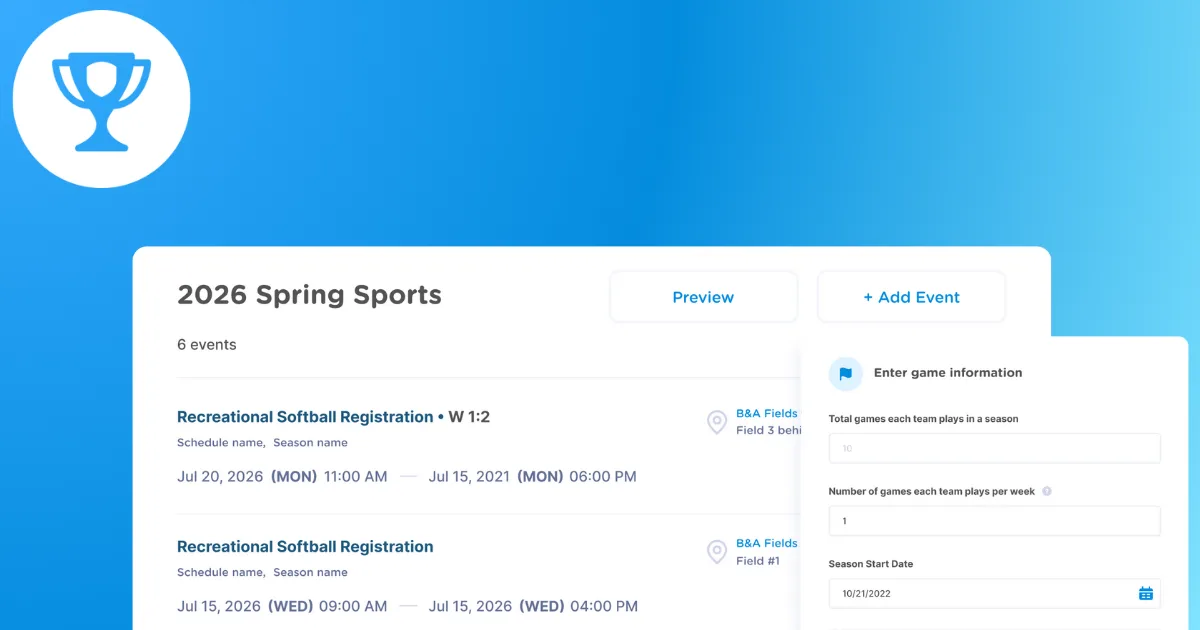
Creating a sports schedule is one of the most important parts of running a season, and one of the easiest places for things to go off track. Between field availability, age groups, weather, and busy family routines, even well-organized volunteers can end up with conflicts or confusion.
A simple schedule template helps you stay consistent, reduce mistakes, and give parents a clear plan for the season. And with Jersey Watch’s scheduling tools, league admins, coaches, and volunteers can build and update schedules in minutes without relying on complicated spreadsheets.
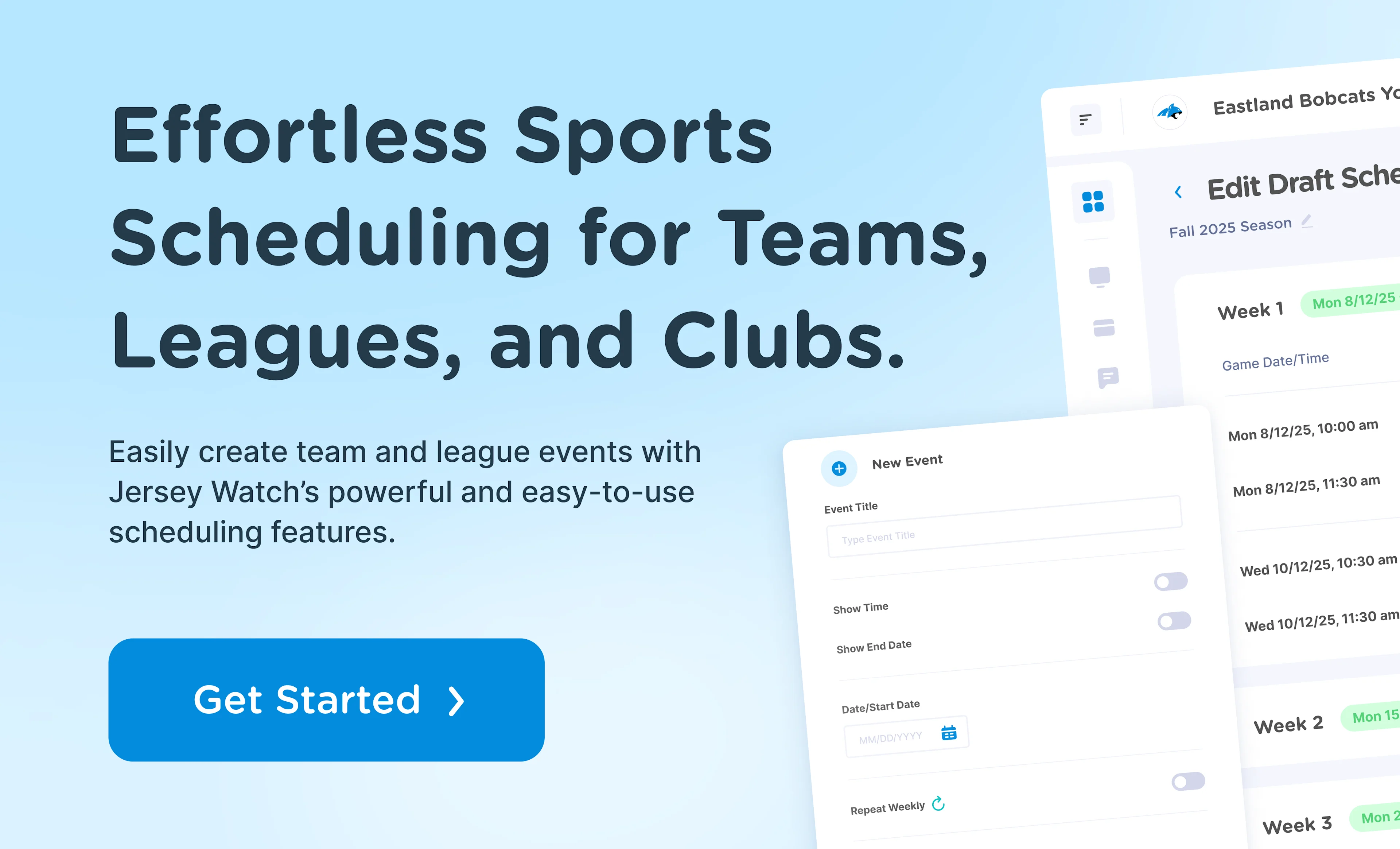
Key components of an effective sports schedule template
Before building your team schedule, it helps to outline the core details every season needs. A strong structure makes planning easier from the start. With Jersey Watch’s schedule generator, you can plug in these key parameters and create a round-robin schedule in minutes.
Date and time
Efficient team management starts with reliable dates and time blocks:
- Time slots: Keep start times predictable so parents can plan ahead.
- Age groups: A seven-year-old and a 17-year-old have very different routines. Schedule younger players earlier in the day and older players later to reduce conflicts.
- Late-night games: Avoid late starts when possible to support rest and performance.
With Jersey Watch, you can also quickly add recurring dates and times for practices and games, helping you focus on larger sports event schedules like tournaments or playoffs.
Locations
When teams use multiple fields or facilities throughout the season, families can easily lose track of where they need to be. Coordinating with different field managers also introduces variables like holiday hours, maintenance windows, and shared space.
A digital scheduling tool makes this simpler. Admin can enter in specific locations and field names, link directly to maps and directions and parents can quickly access all event details in one centralized location. Clear location details reduce confusion and keep everyone on time.
Divisions
Divisions help organize larger sports leagues and keep scheduling consistent. They offer several benefits:
- Balanced talent: Grouping players by skill level ensures fair, competitive matchups.
- Predictable scheduling: Division structures create repeatable patterns (e.g., a rotating set of teams every Tuesday).
- Regional balance: Divisions help smaller regions compete with larger cities without mismatched schedules or expectations.
With Jersey Watch, users can filter schedules by division and click through to practice times, standings, and upcoming games. Whether your youth volleyball team has a cross-town rivalry or you’re managing multiple age groups, division-based filters make it easy to stay informed.
Teams
A season schedule should give families and coaches visibility across teams, including a clear distinction between Home and Away games. It should also include past results, upcoming matchups, and current standings.
With Jersey Watch’s scheduling tool, you can link team pages, rosters, and historical stats in one place, helping everyone stay informed and come prepared.

Game or event durations
Games can run long for many reasons — injuries, overtime, delays — so your season should build in buffers based on typical game lengths. If tournament games usually last an hour, for example, schedule 90-minute blocks to prevent overlap.
These buffers give everyone breathing room, whether for a double-header or an all-day event. A digital scheduling tool can also calculate time blocks automatically for regular games or multi-field events.
⚡ Action: Generate your first round-robin schedule with Jersey Watch's free Sports Schedule Generator!
Tips for creating sports schedules
Small planning adjustments can prevent many common scheduling issues, and the right tools make those details easier to manage. Here are a few practical tips to keep your season running smoothly.
Consider age groups
Younger players have different routines and energy levels than older athletes, so plan time slots accordingly. A digital scheduling tool can help you filter by age and identify appropriate windows. Schedule players under nine in the late afternoon or early evening, and older players in later evening slots.
Plan for weather
Weather delays are inevitable, so build flexibility into your schedule. A digital tool can help you reschedule quickly and notify families when plans change.
- Set aside a dedicated make-up day for postponed games, ideally in order of postponement.
- Enable automatic alerts for cancellations or delays.
- Account for seasonal weather patterns.
Minimize travel for families
Reducing travel makes the season easier for families and helps avoid conflicts.
- Cluster games locally whenever possible.
- Rotate farther locations fairly across teams.
- Use scheduling tools to identify clusters and reduce back-to-back long drives.
Create a fair home/away schedule
A fair distribution of home and away games keeps competitions consistent and supports player satisfaction.
- Aim for roughly equal home and away matchups for each team.
- Use a digital tool to track home/away counts.
- Keep the difference within two games to maintain fairness.
Coordinate referee coverage
Referee availability can impact your season, so plan assignments early and keep everyone on the same page.
- Create a shared schedule for referees.
- Flag game times and locations at least three weeks in advance to secure officials.
- Coordinate calendars to prevent coverage gaps.
Account for special events
School and community events can disrupt practice and game times, so build them into your schedule.
- Block off holidays, school breaks, and major local events.
- Sync your schedule with school or town calendars to adjust for things like early release days or community festivals.
Schedule break times
Breaks keep games running smoothly and give teams and staff time to reset.
- Add a 15-minute buffer between games for field prep and warmups.
- Schedule a 30-minute maintenance break every three to four hours for all-day events or tournaments.
Build in flexibility
Unpredictable changes are part of every season, so leave room to adjust when needed.
- Set aside a day for make-up games.
- Block out the last week of the regular season for rescheduled matchups.
- Communicate flexible options upfront to build goodwill with parents.
Establish clear communication
Clear communication helps families stay organized and reduces confusion when plans shift.
- Notify everyone of schedule changes, ideally 48 hours in advance.
- Use Jersey Watch’s communication tools to send text and email alerts to coaches, officials, and parents.
- Share updates across multiple channels, including email, text, social media, and your league website.
Consider a physical schedule
Printed schedules can be useful for families who like visible reminders at home.
- Provide flyers or handouts that can be pinned to bulletin boards or refrigerators.
- Pair printable schedules with digital updates so new information is always easy to find.
- Use a design tool like Canva to create polished, branded schedules.
Implement regular reviews
Gathering feedback throughout the season helps you improve future schedules and address issues early.
- Ask participants to rate the schedule at mid-season and again at the end.
- Collect suggestions for improvements and adjust when appropriate.
- Include a question about schedule fairness and home/away balance.
Types of sports schedule templates
Jersey Watch offers several schedule templates to fit different league sizes and structures. The right option depends on how your teams are organized and what you need to manage throughout the season.
League schedules
League schedules are the most common template and typically follow a round-robin format, with every team playing each other once during the season. You can create your own sports schedule manually or use a sports schedule generator to automate round-robin games.
With Jersey Watch, it’s easy to manage multiple facilities, post game results, and track standings in one place. Clear, consistent league schedule templates also strengthen your team’s general trustworthiness, support parent communication, and keep players engaged throughout the season.
All templates should include:
- Season name (e.g., “2026 Winter Sports”)
- Number of divisions and division names
- Games per team per season
- Games per week per team
- Game duration
- Time between games
- Number of locations
- Location availability
You can generate schedules for your league with Jersey Watch's Sports Schedule Generator
Practice schedules
Practice times usually follow predictable patterns. It helps to combine league and practice details into one digital or printed document so parents can view all events more easily.
Common template options include:
- Google Calendar: A simple way to track practices and send automatic updates.
- Spreadsheets: Tools like Excel or Google Sheets let you list events and use tabs for special activities or league information.
- Sports scheduling software: Best for organizations managing multiple teams, divisions, or facilities, since it reduces errors and keeps everything organized.
Generic tools work for single teams, but if you’re coordinating several groups, sports scheduling software is the more reliable choice. It lets you sync practices and games into one master view while still filtering by team or category.
You can quickly create repeating events using Jersey Watch's scheduling tools
Tournament brackets
Tournament brackets help organize postseason or all-star games into an easy-to-read format. No matter the tournament structure — double elimination, qualifier rounds, or pool play — there are several bracket tools to choose from:
- Sports Engine Tourney: A mobile app with free template brackets, schedules, and standings.
- Bracket HQ: Simple bracket templates with flexible customization options.
- Challonge: A widely used tournament platform that supports brackets, match tracking, and participant updates.
As you build your tournament schedule, remember to factor in rest periods, field maintenance, and other delays. With most tournaments running all day, even minor setbacks can affect the entire schedule.
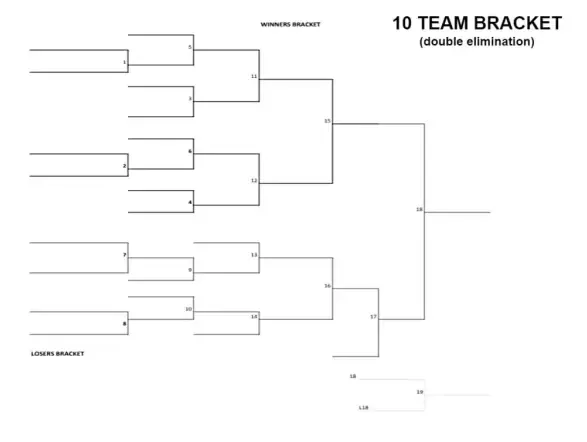
A tournament bracket template
Why use a digital sports schedule template
Manual scheduling is time-consuming and increases the chance of errors. A digital template automates recurring events, so you’re not entering the same dates and times week after week. Using a schedule-maker also improves accuracy and accessibility, which is especially important when plans change.
In 2024, youth sports teams lost an average of one week of practices or games due to weather disruptions, making a centralized digital schedule especially valuable for families checking updates.
Advantages include:
- Real-time updates: Quickly adjust for weather, illness, or field changes and keep everyone informed.
- Mobile access: Parents can confirm times and locations from any device, without sorting through long text chains.
- Reduced errors: Digital tools help volunteers track dates and avoid conflicts, like scheduling practice on a holiday.
⚡ Want to test out Jersey Watch’s intuitive tools? Explore the features today!
Customize your sports schedule with Jersey Watch
Jersey Watch’s free scheduling tool helps you create a full season schedule quickly and reliably. Instead of mapping out every game and practice by hand, you can automate scheduling, account for common obstacles, and share updates with your community in minutes. It’s especially helpful for volunteers who don’t have much spare time.
If you need more than a scheduling tool, Jersey Watch also offers an all-in-one system for building a sports website, managing registration and pricing, and collecting payments. Everything is designed to fit easily into your existing routine.
Final tips for a smooth season
However you choose to structure your season, planning ahead is key, from make-up game days to field maintenance and communication. A few simple habits can help everything run more smoothly.
- Organize games and practices around age groups, break times, and facility availability.
- Create a fair home vs. away schedule to spread travel evenly across teams.
- Account for common disruptions such as weather delays or overtime.
- Use scheduling templates to keep practices, games, and tournaments organized.
Ready to start your season off right? Build your schedule in minutes with Jersey Watch.

Tim GusweilerCo-Founder / CEO
Tim is the Co-Founder of Jersey Watch, where he works with the product, marketing, and customer support teams to build software for youth sports organizations. He writes about youth sports management based on years of experience working with league administrators, coaches, and volunteers, along with a lifelong passion for sports.


