6 Ways to Register More Youth Football Players This Season

Courtney Calvo Last updated: September 25, 2026

A family meant to register their son for the fall football season. The deposit required mailing a check, the waiver came as a printed page tucked in a folder, and the deadline never made it onto anyone's calendar. By the time they remembered, registration had closed and their son no longer had a guaranteed spot on the roster.
Successfully registering more youth football players means removing the payment paperwork issues that stalls already-interested families before they finish signing up. Most leagues don't lose players to a lack of interest. They lose them to a slow-moving form, a check that never gets mailed, or a deadline buried in a group text.
There are a few ways league commissioners, club directors, and coaches can get ahead of these barriers, and we’ll break down six of them below.

Where youth football registration falls apart
Youth football registrations most often stall at a few logistical points: timing, payment, paperwork, and follow-up with returning families. A family means to sign up, then the window slips because life gets busy, another sport has already claimed the calendar spot, or the form asks for information nobody has handy in the moment.
Payment deserves its own attention. Rising costs create barriers for lower-income families across youth sports. A single lump-sum payment can push out those who would have registered with more flexibility.
Paperwork adds another barrier. Acknowledgement waivers and coach background checks often live outside the main sign-up process, so a completed registration ends up waiting on a second, separate step.
Once a family drops off, it’s difficult to get them to come back to your organization, especially if the barriers to youth sports registration they faced before go unresolved.
1. Open registration early with online sign-ups
Opening registration weeks before the season starts, while using an online form, keeps families from drifting to whichever sport opens sign-ups first. A family calendar fills up quickly once soccer, baseball or a local fall camp posts its own deadline. Some families choose a sport based on availability and may not wait for yours to come around.
The broader participation trend adds urgency. Youth tackle football participation among ages 6–12 dropped 7% from 2019 to 2024. Early registration gives your program more time to secure commitments before families choose another activity.
A volunteer can build a registration page and take a family's first payment the same day on Jersey Watch, with no sales call required. Set up the form, publish it to your website, and start collecting deposits early. For more guidance, check out these youth football registration tips.
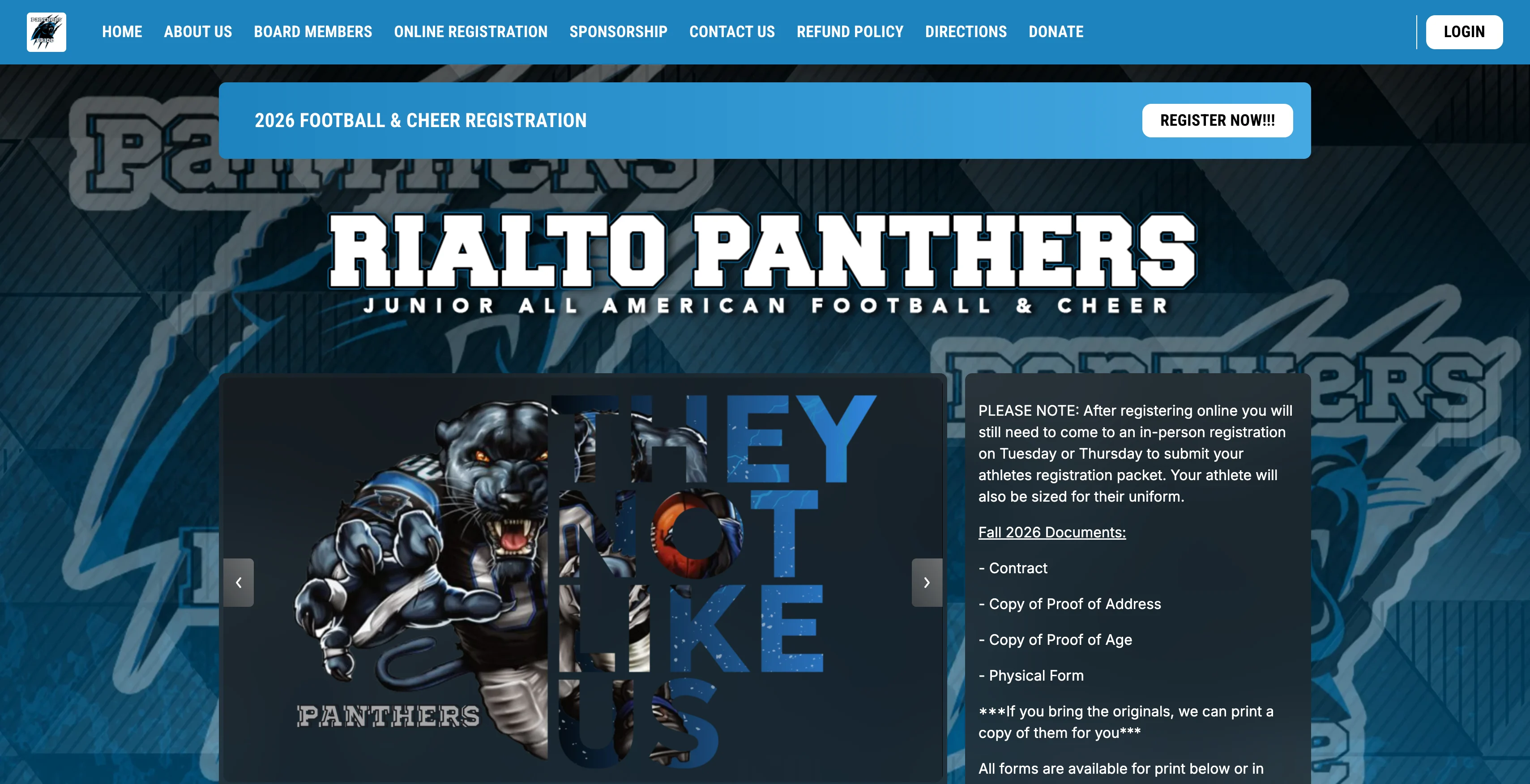
A youth football program with a banner to register online for football and cheerleading
2. Use current data to set deadlines
Your registration deadline shouldn't come from a gut feeling about when families tend to sign up. Set it based on actual data: your own year-over-year registration numbers, local participation trends, and when competing sports in your area typically open sign-up. Families planning a fall season make sport commitments early, and the program that asks first usually gets the answer.
And the race to capture the most sign-ups isn’t slowing down. Unlike the reports for tackle football, youth flag football participation among ages 6-17 grew 14% from 2019 to 2024, making it the only team sport SFIA tracked as growing during that stretch. More programs competing for the same fall weekends means families are given more opportunities than ever before.
To help make sure your program is top of mind, look at when registration drop-off happened in past seasons. If families consistently stop signing up after a certain date, that's your actual deadline, not a random date you set based on a feeling.
Set a firm early-bird date a few weeks before competing local sports open registration, then a hard close before their windows end. Publish both dates as soon as registration opens instead of leaving the form live indefinitely and hoping families circle back.
Take a look at six must-have tools to register more athletes online
3. Offer deposits and flexible payment plans
Letting families pay a deposit now and finish the balance in smaller installments removes a major cost barrier that can cause registration to falter.
A full football fee due all at once may make a parent have to wait until later to register because they’re waiting for their next paycheck to come through. Waiting until later can actually mean never signing up because they forgot or they went with another competing opportunity that offered more flexible payments.
Offering a deposit changes that reality. Instead of asking for the full amount at checkout, you set a smaller upfront payment, maybe $25 or $50, that confirms the player's spot and gets them into your system. The remaining fee is divided into installments that are charged automatically over the following weeks.
Jersey Watch includes this payment plan option in every subscription. Here's what setting up a payment plan looks like:
- You set the deposit amount and installment schedule when you create your registration form.
- A parent pays the deposit online at sign-up, confirming their child's roster spot.
- The remaining balance is split into scheduled charges processed automatically on the dates you set.
- Admin can see all payment plan installments in the Dashboard and track whose payments are still outstanding.
Finding an online solution that publishes its processing fees is important too. Jersey Watch's processing rate is 3.5% plus $1 per transaction. On a $50 deposit, that's $2.75 in processing, whether you're collecting from 10 families or 500.
A program that knows its processing cost per payment can build it into registration pricing from the start rather than discovering missed or untracked payments after the season begins. In the early stages of pricing, check out this youth sports registration fee calculator to help.
4. Move sign-up and waivers online
Online registration forms keep football sign-up details, waivers, and discounts in the same process for families. A single form can include custom fields for your program, waivers and consent collected upfront, and discounts for families registering more than one player.
Custom forms for your program
A custom youth football form collects jersey size, position preference, division, medical information, and emergency contacts in one online step.
Every field serves a purpose. Jersey size helps with equipment orders. Position preference helps coaches plan roster spots before the first practice. Division information helps admins sort players by age or weight without a separate spreadsheet. Medical information and emergency contacts give coaches the details they need before an injury occurs.
An administrator can add these fields to a registration form using Jersey Watch without touching a single line of code. For a full breakdown of which fields to include and how to organize them, see this youth football registration form template.
Waivers and consent for families
Collecting waivers and medical consent inside the same online form removes a separate paper step families may forget to return before a deadline. A parent fills out the player's information, confirms they've read the liability waiver, and adds medical consent details in one sitting.
With the old approach, a family submits a paper registration form, then the season almost starts before anyone realizes the waiver never made it back. That gap holds up an otherwise complete sign-up right when your roster needs to be finalized.
Discount codes for multi-child families
A sibling discount at checkout removes the manual work that can stall a family trying to register a second or third player. An administrator sets up the discount and attaches it to the football program's registration form. When a family registers an additional child, the total adjusts before payment goes through.
Jersey Watch includes family and multi-player discounts in every subscription, so a program can offer one without purchasing a separate add-on.
5. Build background checks into your registration
Coach and volunteer background checks belong in the same platform as player registration. When a program handles player sign-up through Jersey Watch, it can also manage volunteer background checks from the same account instead of using another manual process.
An administrator can start a background check and track its status in one place, making it easier to see who's cleared, who's pending, and who still needs to submit information before the season begins.
For football parents, an organized screening process can also serve as a trust signal. Many football programs treat background checks as standard practice, and a clean, centralized record helps show families that screening is being handled consistently.
6. Send automated reminders to lapsed families
Scheduled text and email reminders to last season's families who haven't yet registered can recover at-risk enrollments more directly than advertising to a new audience. Those families already know your program. They just haven't gotten around to completing this season's form.
Last season's roster can give you a ready-made contact list of parent names, emails, and phone numbers. Jersey Watch's text and email tools let you message those families and point them directly to your registration page.
Tie the outreach to the deadlines you already set. Send one reminder as the early-bird cutoff approaches, then a second closer to the final deadline. Those multiple touchpoints reach families once while there's still a discount to claim and again when time is running out, without flooding their inboxes.
Fix the friction, not the marketing
None of this requires running more ads or adding a new division to chase more sign-ups. It comes down to making the process easier for families who already intend to register. Start by identifying where families are dropping off, then address that point directly with early registration, flexible payments, online paperwork, or timely reminders.
Jersey Watch's Customer Care team can help you put that system in place without turning it into a lengthy project. The team provides free content migration, helps set up registration forms, and assists with custom domains. Most new customers have their website and registration live within one business day. Check out the Customer Care Commitment to see what to expect when you work with their team.
Ready to make sign-up easier for families and volunteers? Launch your youth football registration with Jersey Watch.
FAQs
How much does it cost to set up online registration for a youth football program?
Jersey Watch costs $19 for the first month, then $348 per year after that, with no setup fees or contracts. That subscription includes the website, registration forms, payment collection, and payment plans, so a program doesn't pay extra to offer deposits. Payment processing runs at 3.5% plus $1 per transaction, giving treasurers a predictable cost upfront.
Is it too late to switch registration platforms once the season is close to starting?
Switching platforms close to a season isn't too late in most cases. Most Jersey Watch customers have their website and registration live within one business day. Its Customer Care team provides free content migration and helps with custom domain setup, so an admin doesn't have to handle every setup step alone.
How often do coach and volunteer background checks need to be renewed for a youth football program?
Most youth football programs require a new background check each season, since coaching staff and volunteers often change year to year. Building this step into the same registration flow used for players makes it easier to track who still needs a current check. This approach helps programs stay consistent instead of tracking background checks through a separate manual process.
What payment methods can families use to pay for youth football registration online?
Most online registration platforms, including Jersey Watch, let families pay by credit or debit card during checkout, replacing mailed checks or cash drop-offs. This gives parents an immediate way to complete a deposit or installment payment the moment they finish a registration form. It also gives program treasurers a digital record of every payment without manually reconciling cash.
What happens if a family misses the final youth football registration deadline?
A missed deadline doesn't have to mean a lost registration, since many programs keep a short late-registration window open with an added late fee. Sending one more reminder through text or email right after the deadline often catches families who simply lost track of the date. Building this late window into the same registration form keeps the process consistent instead of handling stragglers by phone.

Courtney CalvoCustomer Care Team Lead
Courtney Calvo is the Customer Care Team Lead at Jersey Watch, where she helps youth sports organizations get started with registration, websites, and league management tools. She brings both professional expertise supporting leagues and firsthand experience as the parent of a youth soccer player.


