6 Ways to Collect Youth Sports Donations On Your Own Site

Courtney Calvo Last updated: October 2, 2026
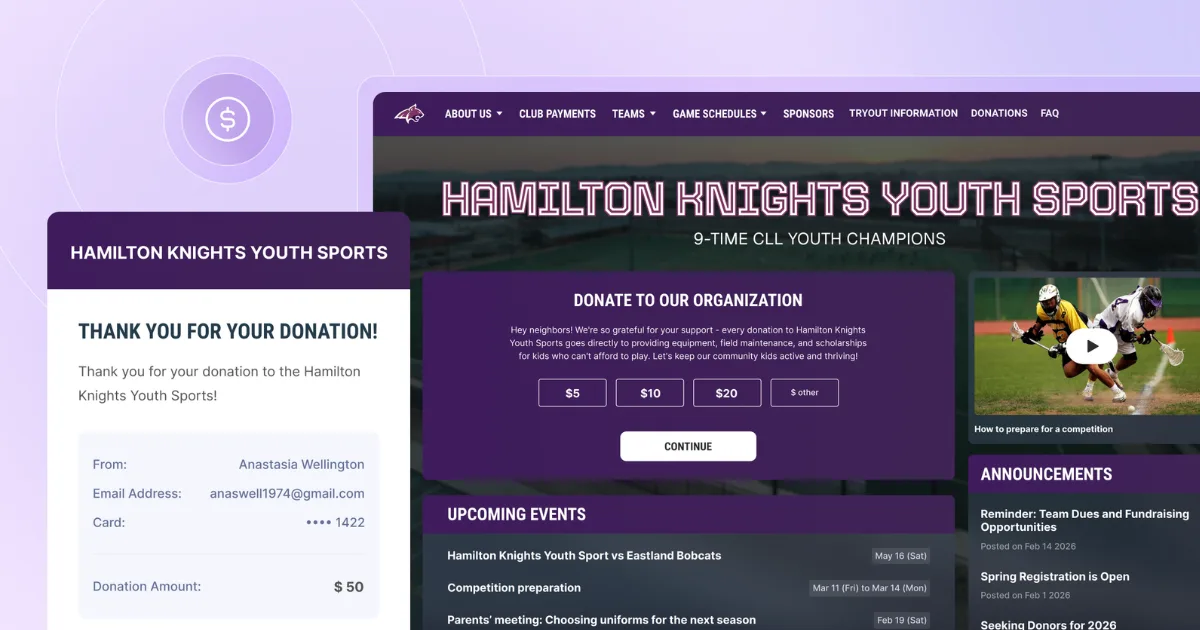
Another login. Another password to remember. Another set of processing fees to reconcile separately from registration. That's the math running through a volunteer treasurer's head when the board asks for a way to accept donations before the season starts.
Collecting youth sports donations means gathering charitable gifts from parents, alumni, and local supporters to help cover a league or club's costs, usually through a website donation page, a registration form add-on, or a dedicated fundraising tool. The challenge is choosing the right method without adding a fifth or sixth account to your already-full plate of software logins.
Families are feeling the cost squeeze too. Average U.S. family spending on a child’s primary sport reached $1,016 in 2024, a 46% jump since 2019. Asking those same families for a donation takes more thought when they're already stretched thin.
Most organizations may not need a new platform at all - the website and registration system you already use to run your season can likely handle the job. We’ll look at when that’s the case and how it works, then run through some specific situations where a dedicated outside tool may make sense, like recurring giving, crowdfunding, or cause-based campaigns.
Where to start collecting donations
Start collecting donations where you already run your season: your website and registration system. If you're a volunteer treasurer, you already use that system to track registration, schedules, and payments. Adding donations there means no new account to set up, no additional login to distribute, and no separate set of processing fees to track.
Work through your existing options first, beginning with a website donation page, registration add-on, and sponsorship tiers. Personal letters and emails can direct supporters to those options, while niche donation platforms are best reserved for specific needs your existing tools don't cover.
1. Collect donations through your own website
A dedicated donation page on your organization's existing website is the simplest way to collect gifts because it requires no new software, separate sign-up, or additional login for parents to remember.
That page gives supporters one clear place to learn what you're raising money for, whether that’s tournament fees or new equipment, and contribute directly. A volunteer can set it up without waiting on a developer or technically experienced board member.
How Jersey Watch keeps donations on your existing league site
Jersey Watch's website builder makes adding a page like this straightforward, and its page examples gallery includes a donation page you can use for reference. Donations live on the same site families already visit for schedules and registration, so supporters don’t have to find or learn another system.
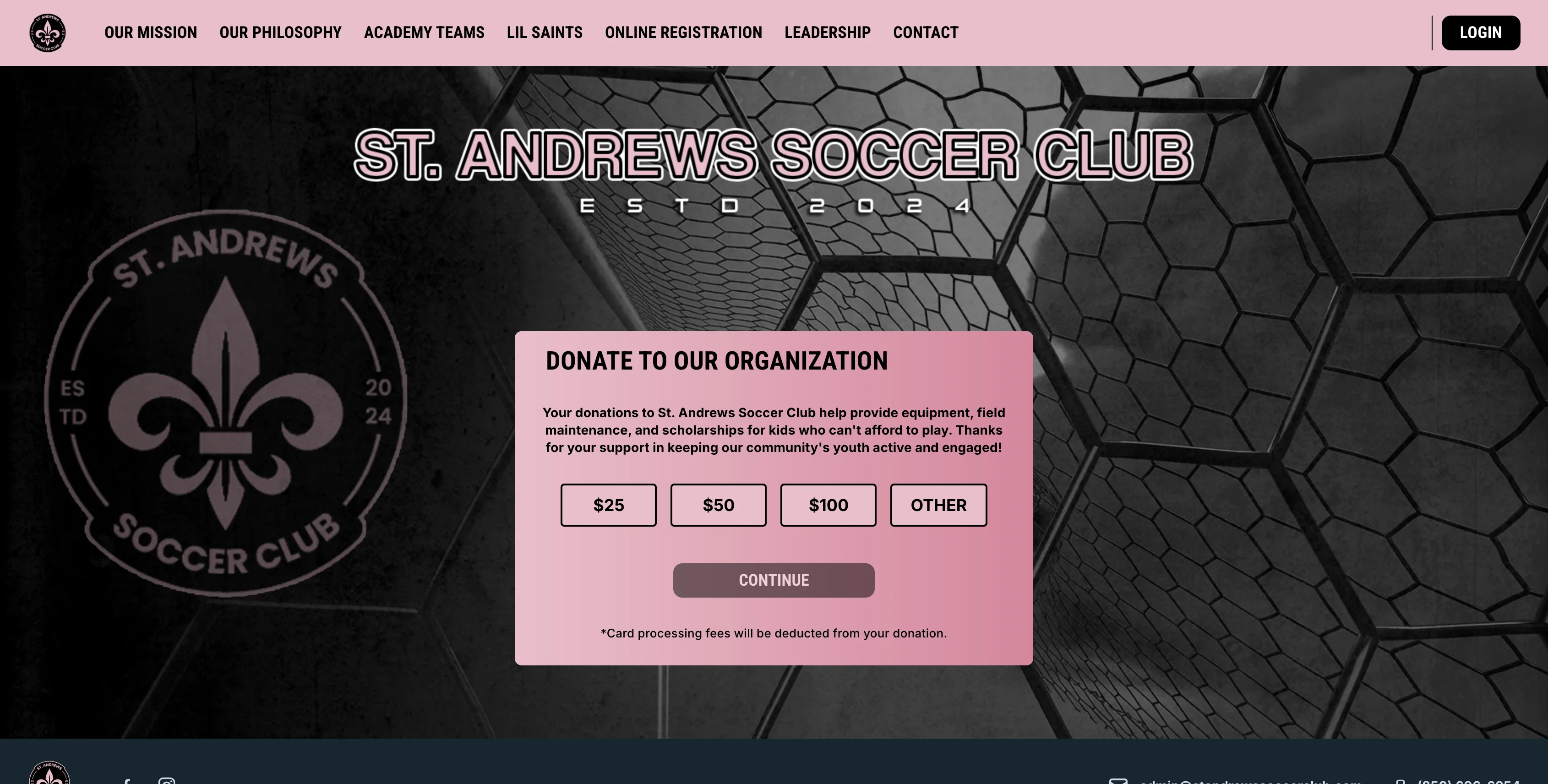
2. Add donations to your registration form
Adding an optional donation line to your registration checkout lets parents give while they're already paying, with no separate page to visit. A simple, low-pressure prompt works best, like "Add $10 to sponsor a player in need" or an open field where parents can choose an amount.
Because families are already completing a payment, the donation becomes one more checkout option instead of a separate request they have to return to later.
Jersey Watch's online registration and payment collection lets you build this donation option into the same checkout families complete each season. Processing runs at a flat 3.5% plus $1 per transaction, giving your organization a predictable cost to account for when setting its donation goal.
3. Offer sponsorship tiers on your site
A sponsorship tier is a set amount contributed by a local business in exchange for a specific, visible perk. For example:
- Bronze: Logo on your league website
- Silver: Space on team jerseys
- Gold: Field signage for the season
A custom website gives sponsors a visible place for their name or logo instead of offering only a generic donate button. Once you’ve established the tiers, publish a page listing each level, its price, and the corresponding benefit. Route payments through the site so a business can select a tier, pay, and claim its sponsorship in one place.
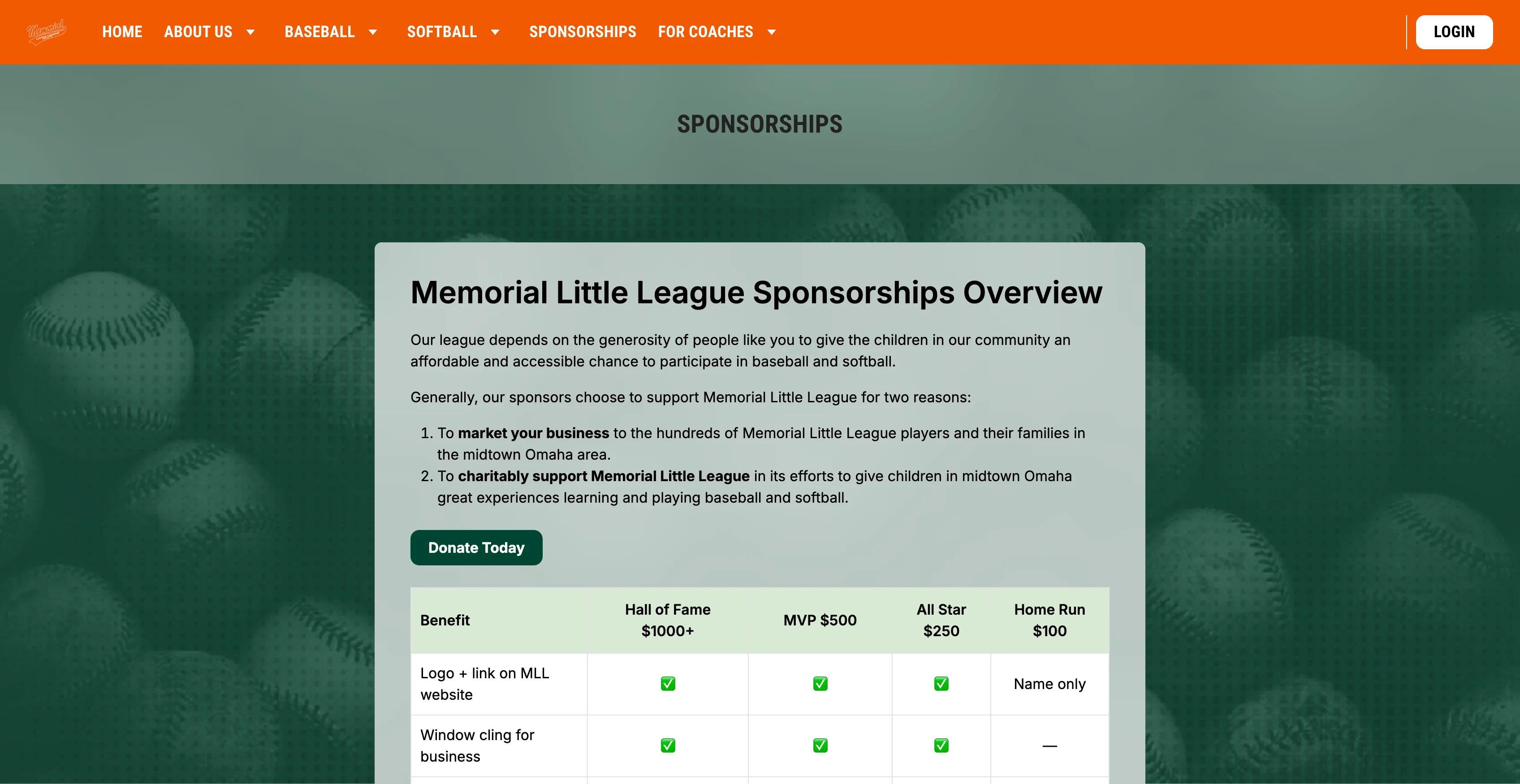
A dedicated sponsorship page for Memorial Little League with multiple tiers and an easy way to pay online
4. Send personal donation letters and emails
A personal letter or email works as a direct, individual request layered on top of your website donation page, not a replacement for it. The message is the invitation, while your site handles the actual contribution.
Build your appeal around who you're asking, what you need, and why it matters. Name a specific goal, like new catcher's gear or tournament fees, thank the recipient for their support, and close with one clear request.
Every letter or email should direct supporters to the same place, whether that’s your website donation page or registration donation option. That keeps you from juggling replies, checks, and different payment instructions from multiple families.
Not sure where to start? Take a look at this sample donation request letter to view a ready-made template and see other tips.
5. Turn to niche donation platforms instead
Consider an outside donation platform only when you need a format your website page or registration add-on doesn’t provide. Donorbox, PayPal, FundRazr, Fundly, and StartSomeGood each address a specific need, such as recurring gifts, a simple payment button, social crowdfunding, visual campaigns, or cause-based fundraising.
Donorbox for recurring donation pages
Donorbox fits an organization that specifically needs a dedicated recurring or monthly giving page. Its recurring donation feature lets supporters commit to a monthly gift and manage that contribution themselves, which is different from making a one-time donation during registration.
A website donation page or registration add-on can handle one-time gifts, but neither typically supports ongoing, sponsor-style giving that renews each month. If your organization wants a group of families or local businesses to contribute regularly throughout the season, Donorbox can fill that specific need. For one-time donations, start with the channels you already use.
PayPal for simple one-time gifts
PayPal fits an organization that wants a bare-bones, one-time donate button without building a full donation page. Its Donate button lets you drop a single payment link on any page or email in minutes, and its nonprofit fundraising tools give registered charities lower processing rates on gifts collected this way.
This approach is intentionally simple. Supporters follow the link, make a payment, and receive a receipt. Treat it as a fallback if you need a quick place to direct one-time gifts. If you want a real donation page with your own branding, a goal tracker, or sponsorship tiers, PayPal won't build that for you.
FundRazr for social crowdfunding pages
FundRazr suits a short, social-media-driven crowdfunding push rather than an ongoing, season-long donation page. It works best as a shareable campaign promoted through Facebook, Instagram, and group texts rather than as a permanent fixture on your website.
For example, a travel team might create a campaign with a specific goal for new catcher's gear or practice jerseys. Players and parents can then share the link with grandparents, neighbors, and local businesses. Once that one-time goal is met, regular season donations can continue through the organization’s website or registration form.
Fundly for one-time campaign drives
Fundly fits a single, visually-driven campaign, such as raising money for a specific trip or equipment purchase, rather than year-round donations. Its campaign-page format lets you build a photo-focused page with a clear goal and progress tracker so supporters can see what their gift will fund and how close the team is to reaching its target.
A travel team heading to a tournament or a club raising money for new uniforms or a batting cage can direct families and sponsors to one page centered on that particular need.
StartSomeGood for cause-based crowdfunding
StartSomeGood fits a mission-driven, cause-based campaign rather than routine season fundraising. The platform centers each campaign on a specific cause and the story behind it instead of collecting ongoing gifts.
That makes it an option for a defined effort, like funding scholarships for families who can't afford registration fees or launching a new program in an underserved neighborhood. Of the five outside platforms covered here, this is the narrowest option. Use it when a particular cause needs its own campaign, and keep everyday season donations within your website and registration form.
6. Time your ask around registration
Launch your first 2027 donation push when registration opens or shortly afterward, while families are already visiting your site and preparing to pay. Adding an optional contribution at that point makes the donation part of a familiar checkout process instead of a separate request.
Equipment costs also support asking early. Junior team sports equipment sales in the U.S. reached $1.6 billion in the 12 months ending July 2026, up 3% year over year, while 41% of parents cited cost as an obstacle to participation. With families already managing those costs, keep your request optional and tie it to a specific need.
After the initial ask, send one mid-season reminder and one wrap-up request connected to a cost such as uniforms or tournament fees. This guide on increasing youth sports donations offers more ideas on building that cadence.
Handling tax-deductible donation receipts
For most youth sports leagues, a gift is tax-deductible only when the organization has recognized 501(c)(3) status. If your league has that status, donors may be able to deduct their contributions. If it doesn't, state that clearly on your donation page instead of allowing families to assume a deduction is available. Because many volunteer-run leagues operate without nonprofit status, consult a tax professional before promising that a gift is deductible.
For gifts of $250 or more, donors need written documentation from the organization, and a pledge counts as deductible only for the amount actually paid that tax year, not the full amount promised, according to IRS Publication 526. Keeping that documentation on hand also makes tax season easier for the families who supported your organization.
State charitable solicitation rules also vary. Some states require organizations to register before requesting donations online, including through a button on their own website. Check the rules in your state before launching the page.
Start your 2027 donation page now
An optional $10 contribution during registration shows how simple the strategy can be. Families are already at checkout, using a payment process they trust, and donating requires only one additional step.
Keep outside platforms available for specific needs such as recurring gifts or one-time crowdfunding campaigns, but don't scatter your everyday fundraising across multiple logins.
Jersey Watch’s website builder and registration and payment tools give organizations a central place to collect donations without a separate sign-up. New organizations can have their site and registration live within one business day of signing up, with support from the Customer Care team and free content migration when moving from another platform.
Add a donation option to the process your families already trust: Set up your donation-ready checkout with Jersey Watch before your next registration window.
FAQs
What should I include on a donation receipt to satisfy IRS documentation requirements?
For any single contribution of $250 or more, the IRS requires a written acknowledgment naming the donor, the date, and the exact amount given. That acknowledgment should note whether the donor got anything in return, since receiving nothing back keeps a gift fully deductible. If a donor pledges more than they pay within the tax year, only the amount actually paid counts on the receipt. Most donation platforms handle this automatically. Jersey Watch, for example, sends donation receipts that include the amount, card used, and date, so leagues don't need to build this from scratch.
What happens if a parent asks for a refund after making an online donation?
Most online payment processors allow a full or partial refund of a youth sports donation, but the processing fee on that transaction typically isn't returned. Posting a simple refund policy near your donation page lets families know what to expect before giving. If a refund request comes in, process it through the same tool used to collect the donation rather than issuing a separate check.
How much can a small youth sports league realistically expect to raise through donations in a season?
A realistic donation goal starts with pricing out one specific need, like uniforms, field fees, or a tournament trip. The average family already spends $1,016 a year on a child's primary sport, a 46% increase since 2019. With 41% of parents citing cost as the top obstacle to team sports participation, a modest ask across your roster can add up over a season.
Can a youth sports league collect donations without having its own website yet?
A league without a website can still take one-time gifts through a basic tool like a PayPal donate button. That approach works, but it separates giving from everything else families already do online for the season, like registration and schedules. With a platform like Jersey Watch, a new site with registration and payment collection can go live the same day, with no sales call or waiting period required.

Courtney CalvoCustomer Care Team Lead
Courtney Calvo is the Customer Care Team Lead at Jersey Watch, where she helps youth sports organizations get started with registration, websites, and league management tools. She brings both professional expertise supporting leagues and firsthand experience as the parent of a youth soccer player.


